Avatar Aang: The Last Airbender is not the traditional hero’s journey story that most mythic tales focus on. It doesn’t look at one’s coming of age, for Aang has already defeated Fire Lord Ozai and ended the Hundred Year War to establish himself as the true Avatar he was always intended to become. Instead, the new film, which takes place roughly ten years after the original animated series, asks important questions about what happens after the victory, as Team Avatar now has to build the world that they fought for.
Such an idea immediately connects Avatar Aang to Star Wars in that Star Wars continually asks the question of what comes after the heroic victory. How does a rebellion turn itself into a governing republic? Who is Ahsoka after leaving the Jedi Order? What happens to Luke after Return of the Jedi and his ultimate ascension to legendary status as the last of the Jedi? Such questions are persistent and pertinent throughout the galaxy far, far away, and all point to one essential and important question that must be asked after the great victory is accomplished—how does one honor the world that one made without becoming trapped in it?
LETTING GO OF THE PAST WITHOUT LETTING IT DISAPPEAR
In Avatar Aang, Aang’s struggle with regard to being the last of the Air Nomads takes center stage, as the story starts with him working to preserve his culture through the finding of ancient relics and artifacts that will keep the Nomads alive as best he can. This purpose shifts radically, however, when he discovers another ancient Air Nomad, Tagah. Suddenly, another person exists who remembers and understands what he has lost. Suddenly, Aang feels less alone.
Through Tagah, Aang learns about Sonam’s staff, which has the power to bestow airbending powers onto individuals who do not have the ability to bend, which means that Aang, if he can find the staff, can create that which was destroyed. This immediately draws audiences into Aang’s motivation, as everyone has suffered some kind of loss wherein they would like to restore that which was taken away in some form, shape, or fashion.
But this temptation is dangerous nonetheless, for restoring the Air Nomads literally is not necessarily the same thing as preserving what the Air Nomads represented. The climax of the film, wherein Tagah uses the staff to give airbending powers to The Denied, a group of rogues seeking the power to take down the benders of the world, points directly toward this idea in that The Denied do not use their powers for the purposes of peace. As a result, Aang rejects the extraordinary power to recreate the past, breaking Sonam’s staff in the process. In the end, Aang decides that the Air Nomad tradition can survive not by bestowing power onto people, but instead by maintaining the culture through beliefs, practices, teachings, and, most importantly, through the people willing to carry such things forward.
Aang’s arc is powerful not because he does the right thing, for the Avatar always will fall on the side of the light, but rather that he comes to a powerful realization by the end of the film: honoring the past does not require reproducing it exactly. This idea, while not exactly the same, harkens back to Luke’s story in The Last Jedi, wherein the legendary Skywalker learns that failure itself becomes part of what one generation passes onto the next.
In The Last Jedi, Luke has an interesting relationship to the Jedi Order, one that actually swings to the opposite end of Aang’s dynamic with the lost Air Nomads. Prior to the movie, Luke has spent his life trying to rebuild the Jedi Order that existed before him. But that Jedi Order was already gone, and that leads to Luke, by the time of The Last Jedi, being consumed by his failures.
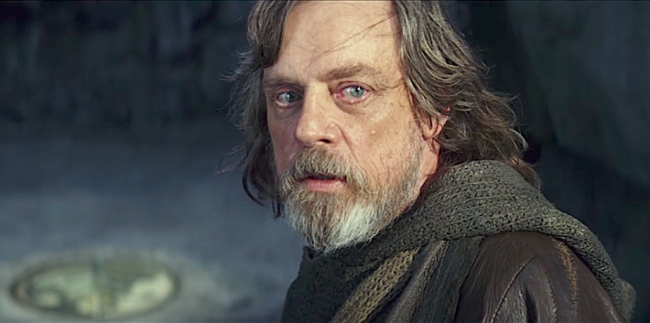
Here, Luke’s mistake swings the opposite direction of Aang’s. Where Aang desperately wants to recreate the past, Luke eventually wants to destroy its influence altogether. Both extremes misunderstand legacy, however, because it is never about the past itself. The past, with all its lessons and impact, is only part of the puzzle. Thus, it is only a piece of what is necessary to build a better future, which both Luke and Aang believe they are doing in their own separate ways.
Eventually, both Luke and Aang come to this conclusion, and they carry on by supporting the next generation. For Aang, that means embracing a new kind of Air Nomad, one without the powers but with the heart. For Luke, this means understanding that the story does not end with him, as the Jedi legacy carries on through Rey, who holds the ancient Jedi texts that will ensure the maintenance of their legacy without demanding a recreation of what was. In both, an important ideology is established, as both stories point to the idea that cultures and traditions do not survive because we freeze them at the moment we lost them, but because living people choose which parts deserve to be carried forward. That is what Aang eventually understands with regard to the Air Nomads, and it is what Star Wars continually wrestles with concerning the Jedi. In both, though, it is made clear that, whether Avatar or Jedi, we are not meant to carry that legacy, or the world itself, alone.
WE AREN’T MEANT TO CARRY THE WORLD ALONE
When Aang’s story picks up in Avatar Aang, his quest is one that is incredibly personal in that he is trying to maintain the history of the Air Nomad tribe, of which he is the last. Yet, when he learns of Avatar Sonam and decides to go try and find more about her, he knows that he cannot and should not do it alone, for his greatest strength has never been the Avatar State—it has been Team Avatar. Thus, he reaches out to each of the team members, asking for their help in his pursuit of the lost Avatar.
However, as the story progresses and Aang finds Tagah, things start to shift. Aang puts less importance on his team and more on his duty as the last Airbender, which isolates him from the people who love and support him the most. This, of course, is Tagah’s plan all along, as he has no interest in maintaining the unity of the benders that Team Avatar worked so hard to create. Instead, Tagah wants to create an Air Nomad empire to rule over and dominate the other cultures, which Aang and the team have no interest in supporting.
In the end, it takes all of Team Avatar, each with their unique skills and abilities, to pull Aang out of his stupor with regard to believing in Tagah and keeping the unity they’ve created via Republic City. Along with that, it takes more than just Aang to restore the Air Nomad tribe. Just as The Last Airbender series so beautifully portrayed in bringing Aang, needing Katara, Sokka, Toph, and Zuko to take down the Fire Nation and bring an end to the Hundred Year War, Avatar Aang shows that needing others is not a one-time thing. In fact, anything great that is to be accomplished is almost always accomplished in community.
Star Wars, in a similar but different fashion, repeatedly begins by making audiences believe in the myth of the lone hero. Time and again, it starts a story with an extraordinary person believing they will save everything alone, only to dismantle that idea completely. That, just as it is throughout the Avatar franchise, is critically important to the overall message the saga is trying to convey, and it started all the way back in 1977 with the original Star Wars.
In said film, Luke doesn’t destroy the Death Star alone. It takes Han returning, Leia leading the Rebellion, R2 making the mission possible, and the sacrifices of characters like Jyn Erso and Cassian Andor to even get such characters to that point in the story. Each person unites with and builds upon those who came before and those who work in the present now to be able to accomplish a feat as large as bringing down a superweapon that can destroy planets.
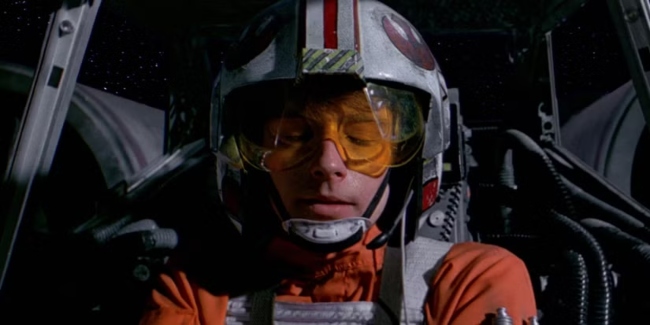
That idea has continued throughout the Star Wars mythos, but when it comes to looking at the dichotomy between Star Wars and Avatar Aang in particular, there is perhaps no greater connection than that of Aang and Ezra Bridger, as both carry enormous responsibility when it comes to taking care of their people and their people’s legacy.
Throughout the Star Wars Rebels series, Ezra learns that leadership means trusting other people to finish such important work with you. In the end, his final message to the Ghost crew boils down to that exact realization. He has learned, be it from Kanan, Hera, or the crew as a whole, that they will be there for him when he needs it most. Moreover, he has learned that he can be there for them without having to have everything perfectly figured out.
This is essentially Team Avatar’s relationship with Aang, and his with them. Katara provides emotional grounding, Sokka brings an intelligence apart from bending, Toph brings strength and perspective, and Zuko brings the idea of uniting the legacy of the past with the hope for a better future. Together, they all make the individuals better, thus making the whole better as well.
Whether it is Star Wars or Avatar, one thing remains true—community isn’t simply emotional support for the hero. It is part of how the hero succeeds. Whether it is Aang or Luke or Ezra, they don’t need their friends and family because they are weak. They need their people because no person, Avatar or Jedi, was ever supposed to bear the future alone. When the hero realizes and embraces that, something greater comes to pass, and the idea of the ideal is able to evolve.
PRESERVING AN IDEAL MEANS ALLOWING IT TO EVOLVE
In Avatar Aang, Aang faces a question that is bigger than whether the Air Nomads survive. Instead, he is learning and deciding what actually makes someone an Air Nomad, as he and Tagah have drastically different views of what that means.
For Tagah, an Air Nomad is someone with the power to rule over others with their airbending skills. While Aang initially believes that the airbending has something to do with it, he never merges with Tagah’s worldview completely, which eventually leads him to something broader and more welcoming than Tagah could ever fathom.
Thanks to Aang, the future of Air Nomad culture is not simply about being able to bend. Rather, it includes people who were not Air Nomads but who choose to study, respect, and preserve their philosophy. In this, Aang doesn’t restore the Air Nation—he plants the seeds for something new. In that newness is not less authenticity. There is simply something that looks different than what once was.
In the same way that Aang redefines what it means to be an Air Nomad, Star Wars is constantly asking what it means to be a Jedi. For generations, being a Jedi meant that one had to belong to the Jedi Order, having been trained in a temple since childhood, bowing to the Jedi Council and prescribed traditions that shaped every Jedi’s philosophy in some way, shape, and/or form. Then Order 66 wiped away the Order completely. Suddenly, the Jedi proper were gone, but the idea of the Jedi survived.
In that survival came an important question—what is a Jedi? That question is answered by a number of Jedi in a variety of ways, be it Kanan showing that a Jedi is defined by their choices, Ahsoka showing that there is a difference between institutional identity and lived values, or Luke Skywalker taking shreds of the Jedi tradition to create something new. In each, there is a twist on the meaning of what a Jedi is, yet at the same time, there are connections, such as the importance of morality and the value of life, that tie them all together.
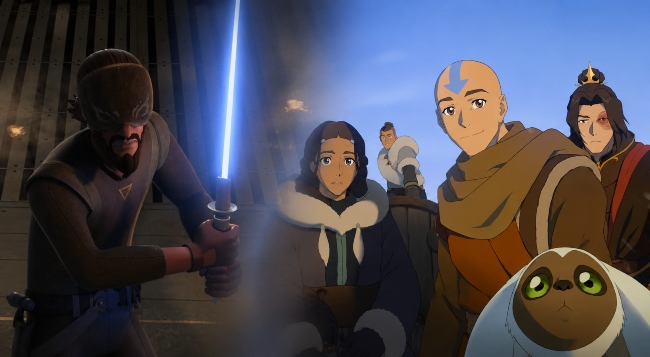
In Avatar Aang, Aang is essentially facing the same question with a different name. However, where Star Wars never fully lets a character like Luke answer that question because his Jedi Order fails, Avatar Aang is very clear on what it means to be the last representative of a lost tradition in that Aang ultimately chooses spirit over replication. In essence, being an Air Nomad is about embracing the ideal and not the skill, which in and of itself is an evolution of the ideal.
For years, Aang struggled with the idea of his people’s traditions dying with no one to carry them forward. But traditions can also become lifeless when people believe they are only authentic if they never change. Tagah fails to see this, and it is ultimately why his pursuit of an Air Nomad empire was bound to fall short of what he wanted it to be. Aang sees the truth, which is that an Air Nomad is not about the power of self, but rather the power of stewardship, which means knowing what must remain and what must be allowed to change.
As Star Wars moves forward into the post-sequel trilogy era, characters like Rey will have to make choices about what it means to be a Jedi in the same fashion. In making such a decision, they will not just define what it means to be a Jedi. They will define what it means to be the one who remains.
CONCLUSION- WHAT IT MEANS TO HOLD THE RESPONSIBILITY OF REMAINING
By the conclusion of the Avatar Aang film, Aang’s victory isn’t bringing the Air Nomads back. It is accepting that what happened to them cannot be undone, while also understanding that he can remember them, embody what they taught him, invite other people into those values, and, in the end, build something that allows their influence to continue. That transforms his role from merely being the last of the Air Nomads and makes him the bridge between what was and what comes next.
This is one of the recurring roles seen across Star Wars as well, whether it is Luke being the bridge between the old and new Jedi, Ahsoka carrying on the Jedi teachings without the institution, or Kanan passing on something different to Ezra than was given to him by Depa Billaba.
In such ideas, both franchises land on an important point, which is that nostalgia is not an endpoint. The goal is not, nor should it be, getting the old world back. The goal, instead, is to take what was good about the world bygone and use it to build what comes next. When one does this, be it Aang rebuilding what it means to be an Air Nomad or Leia redefining what it means to be a person of endless hope, one truth emerges. We don’t honor the people and traditions that shaped us by refusing to move and grow beyond them. We honor them by carrying the best parts somewhere the past never had the chance to go.


