Star Wars: Visions Presents—The Ninth Jedi, which was released on August 8, 2026, breaks new ground for the Star Wars: Visions initiative. The Ninth Jedi continues the story of Lah Kara, first introduced in the short “The Ninth Jedi” in Volume One and subsequently continued in “The Ninth Jedi: Child of Hope” in Volume Three. Volume Three was the first to give us onscreen continuations of Visions stories we’d already seen. In addition to “Child of Hope,” Volume Three also included “The Duel: Payback” and “The Lost Ones,” follow-ups to “The Duel” and “The Village Bride,” respectively. Star Wars: Visions Presents goes one step further—rather than an anthology of unrelated shorts, we were treated to an eight-episode miniseries dedicated to just one storyline.
Star Wars: Visions has been one of the boldest and most exciting initiatives undertaken by Lucasfilm in recent years. Star Wars’s post-sequel trilogy era has had its share of ups and downs, but Visions has unquestionably been one of the bright spots. Visions was part of the slate of the projects announced during the now-infamous Disney Day investor call in December 2020, during which we also learned about Andor, Ahsoka, and Rogue Squadron (RIP). At the time, Visions was billed as “all-new, creative takes on the galaxy far, far away” that would provide “a fresh and diverse cultural perspective to Star Wars.” Volume One brought together eight Japanese studios and featured nine shorts informed in style and substance by anime. Volume Two expanded Visions’s geographic horizons and invited studios from Ireland, Chile, France, South Korea, and other countries to tell their own stories, while Volume Three brought Visions back to its anime roots.
The success of Visions onscreen has also fueled its offscreen growth. Ronin: A Visions Novel by Emma Mieko Candon, which expanded the world established in “The Duel,” released in October 2021. Several shorts, including “Lop & Ochō” and “The Twins,” have received manga adaptations, and there have also been original manga like Visions—Peach Momoko 1 and Star Wars Visions: Tsukumo.
Star Wars: Visions owes its success to many factors, including the quality of the creative talent and the variety of cultures and traditions that inform its stories. But I would argue that the cornerstone of why Star Wars: Visions has been so good is that its stories stand separate and apart from the “official” narrative of Star Wars—in other words, from Star Wars canon. In September 2022, Matt Martin, a member of the Lucasfilm Story Group, tweeted that the Visions stories are “not canon to allow for the most artistic freedom[.]”
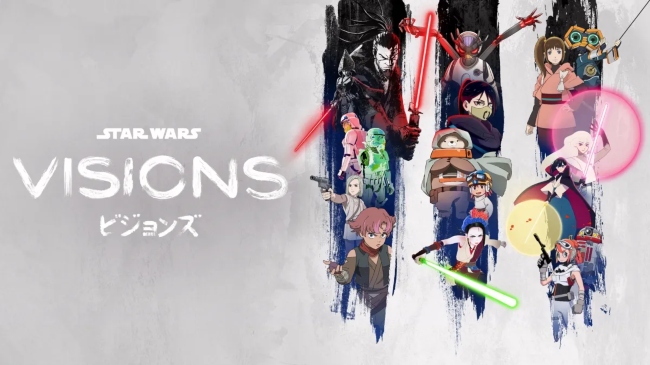
Matt Martin may have admitted more than he realized. Following the Disney acquisition in 2012, Lucasfilm sought to create and maintain a unified canon across Star Wars movies, TV shows, video games, books, and comics, an attempt to introduce a level of cohesion and egalitarianism to Star Wars media that was absent during the George Lucas era. I believe that this effort has been detrimental to both Star Wars storytelling and Star Wars fandom. Creatively, canon handcuffs storytellers. Among fans, meanwhile, canonicity has taken on outsized importance, becoming a shorthand for whether a story “matters” or not. Star Wars: Visions is a testament to what Star Wars could be if it dispensed with the need to fit every story into a single overarching canon.
It’s important to understand the Lucasfilm Story Group and the Disney era canon project in the context of what came before. Beginning with Splinter of the Mind’s Eye in 1978, an expanded universe of Star Wars media—mainly books, comics, and games, but also TV shows like Ewoks and Droids—grew up alongside the original trilogy and kept Star Wars alive following the release of Return of the Jedi in 1983. The Expanded Universe (EU) took on elevated significance in the wake of Timothy Zahn’s Thrawn trilogy, whose popularity ushered in a publishing frenzy.
Despite the fact that the EU more or less was Star Wars between 1983 and 1999, it existed in a precarious relationship with the films that inspired it, at least as far as one man was concerned. In 2008, George Lucas acknowledged that the EU was “incredibly creative” but clarified that “I don’t really have anything to do with other than being the person who built the sandbox they’re playing in.” That same year, in response to a question about whether he’d tell any Star Wars stories set after Return of the Jedi, Lucas said that the books weren’t “at all what I would have done with it,” and that for him, Return of the Jedi marked the end of Star Wars. “Once Vader dies, he doesn’t come back to life, the Emperor doesn’t get cloned and Luke doesn’t get married,” he explained, referencing certain plot elements from EU books.
And yet, the EU still existed. Thus emerged a hodgepodge of heuristics to classify the canonicity of various Star Wars media. Leland Chee, who manages a Lucasfilm database dubbed the Holocron, outlined a canon tier in 2005:
When determining canon levels for individual entries, anything in the films and from George Lucas (including unpublished internal notes that we might receive from him or from the film production department) is considered “G” canon. “T” canon comprises the theatrical release of The Clone Wars and The Clone Wars television series…Next we have what we call continuity “C” canon which is pretty much everything else from the EU. There is a secondary “S” continuity classification used for older published materials created when there was less attention to making everything in the EU fit with everything else in the EU…Lastly there is non-continuity “N” which we rarely use except in the case of a blatant contradiction.
When conflicts arose, seniority won out. If a “T” canon plot point contradicted something that took place in a piece of “S” canon media, the “T” canon version was considered canon. Elements from lower-tiered media could also acquire greater canonical status if incorporated into a higher-tier work. There was also the “three worlds” model that Lucas outlined at a Clone Wars panel in 2008: “There’s my world that I made up, there’s the licensing world that’s the books, the comics, all that kind of stuff, the games, which is their world, and then there’s the fans’ world[.]”
One can’t fault Lucasfilm for wanting to introduce some order to the chaos. The Disney acquisition heralded a revolution in Star Wars canonicity. Lucasfilm famously rebranded the EU as Legends, definitively removing the “licensing world” from the official story of Star Wars. (You can interpret this as a decanonization of the EU, or a reaffirmation of the status it always held—something something from a certain point of view.)
Then there was the Story Group. With George Lucas now out of the picture, it made sense to fashion a new authority to oversee Star Wars storytelling. Crucially, this body could also offer the kind of clarity on what was and wasn’t part of the official timeline that was missing during the EU era. The Story Group also did away with the canon hierarchy that Leland Chee had created. As former Lucasfilm executive vice-president Howard Roffman put it in 2018, with the Story Group, “everything is controlled by one central committee, we can have cannon [sic] that applies across everything[.]”
The Legends rebrand and the creation of the Story Group is arguably the most prominent example of how important canonicity has become in latter-day franchises and the fandoms that they’ve spawned. The Disney acquisition occurred during the heyday of the Marvel Cinematic Universe, which has its own canon and, not unlike Star Wars, has vacillated between what has and hasn’t belonged to that canon. (Marvel’s Netflix shows—Daredevil, Jessica Jones, The Punisher, Luke Cage, Iron Fist, and The Defenders—weren’t MCU canon until 2024, but other pre-Disney+ Marvel shows, like Agents of S.H.I.E.L.D and Inhumans, retain a murkier status.) In 2013, DC embarked on its answer to the MCU, the DC Extended Universe, only to scrap it in 2023 and launch a new endeavor, the DC Universe, complete with a new timeline, in 2024. The release of The Rings of Power has heightened the salience of canonicity within Lord of the Rings fandom, ironic considering how much Tolkien struggled with inconsistencies and contradictions across his works. Canon conversations have even seeped into The Wizards of Waverly Place, after many fans—and the show’s creator—were disappointed with the finale with the spin-off show Wizards Beyond Waverly Place.
Steve Ellerhoff dedicates the opening chapter of his book Jung and Star Wars: A Contemporary Mythology to Star Wars’s ever-evolving canon. As he observes, the concept of a canon has religious roots, with biblical canon being perhaps the most well-known example. In Christianity, the New Testament comprises twenty-seven books, among them the gospels of Matthew, Mark, Luke, and John, which are considered the canonical gospels, the most authoritative accounts of the life and ministry of Jesus of Nazareth. Other texts about Jesus, like the Gnostic Gospels or the so-called infancy gospels, were deemed apocrypha by the early Church and left out of the New Testament.
The gospels of Jesus are instructive because they underscore that canon has always been a fraught concept. Matthew, Mark, Luke, and John tell a broadly similar story about Jesus, but not the same story. Some of the gospels include details not present in others—indeed, John diverges so much in substance from Matthew, Mark, and Luke that the latter three have been separately dubbed the synoptic gospels. When they do talk about the same things, they occasionally contradict themselves. Was Jesus born during the reign of King Herod (Luke and Matthew) or after (Mark)? Did Mary and Joseph already live in Bethlehem when Jesus was born (Matthew) or did they travel there from Nazareth just before his birth (Luke)? Did Jesus die on Passover (Matthew, Mark, Luke) or the day before (John)? The gospels were doing “who shot first” before it was cool.
The canon of Star Wars has inherited this problem. The Story Group was ostensibly created to ensure a unified coherent canon across all Star Wars media. In practice, however, Star Wars has routinely found itself in situations akin to the biblical gospels, where different pieces of media offer different versions of the same event. In some cases, differences are of degree rather than kind. Take, for example, the story of how Cobb Vanth gets Boba Fett’s armor. The first Aftermath book features a confrontation between Vanth and Adwin Charu, who works for the Red Key Raiders and tries to snipe the armor from Vanth. The Book of Boba Fett omits this encounter entirely, but this can be easily chalked up to the TV show abbreviating the account for the sake of expediency.
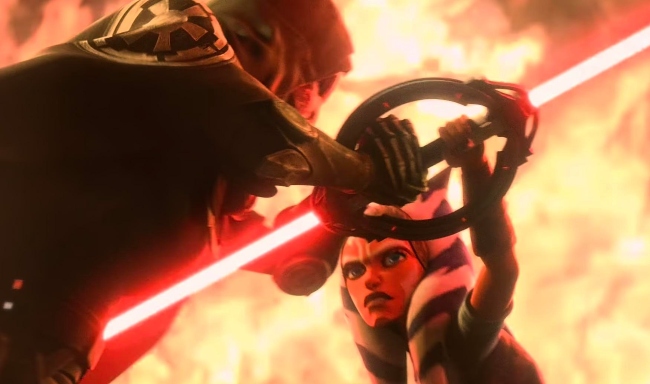
Others are less easy to resolve. The Ahsoka novel opens a different version of the Ahsoka/Maul duel than what is later depicted in “The Phantom Apprentice.” In the former, her lightsabers are still green rather than blue, and Maul is captured in a ray shield rather than strung up by Mandalorians. “Aftermath,” the premiere episode of The Bad Batch, offers an alternate account of Depa Billaba and Kanan Jarrus’s experience of Order 66 from the Kanan comics. Both take place on Kaller, but when and where the Jedi are betrayed differs (in the comic it happens at their camp at night rather than on the battlefield in daytime), the look of the clones differs (Captain Grey wears red and white armor in the comic and green and white armor on the show), Depa’s lightsaber differs (green in the comic and blue on the show), and, naturally, the Bad Batch are present in one and absent in the other. Mon Mothma’s speech denouncing the Emperor for the Ghorman Massacre that the Ghost crew watches in “Secret Cargo” isn’t the speech she delivers in “Welcome to the Rebellion.”
Now and then Star Wars attempts to resolve these discrepancies, with mixed success. In Phase 1 of The High Republic, the Jedi OrbaLin is simultaneously at the Republic Fair on Valo (The Rising Storm) and on the planet Mulita fighting the Drengir (The High Republic mainline comic). OrbaLin also happens to be a blob, which made for a very easy fix in Phase 3, where it’s revealed that he has the ability to split himself in two. Of all the characters to inadvertently put in two places at once, you couldn’t have chosen better.
Other resolutions are clunkier, none arguably more so than Ahsoka’s confrontation with an Inquisitor while in hiding. In the Ahsoka novel, the Sixth Brother tracks Ahsoka to the planet Raada, where she was living among a community of farm workers. The two fight, and Ahsoka kills the Sixth Brother and uses his kyber crystals to fashion her white lightsabers. The Tales of the Jedi episode “Resolve” seemingly depicts a condensed version of the same story. However, as many people observed after the episode’s release, the Inquisitor in the show didn’t look like the Sixth Brother, who’s also depicted in the Darth Vader comics. Eventually it was confirmed that the “Resolve” Inquisitor is in fact a different character—Eleventh Brother. This means that after Order 66, Ahsoka goes to an agricultural planet, hides out as a farmer, is found by an Inquisitor, fights that Inquisitor and kills him, then goes to another planet where she also hides out as a farmer, is found by another Inquisitor, fights that Inquisitor and kills him too. All this despite the fact that, per Dave Filoni, the show and the novel are telling “the same story.”
The challenge of canonical consistency is, I would argue, not reducible simply to errors among creatives or the presence or absence of a supervisory committee like the Story Group. Rather, it’s inherent to the project itself, especially at scale: the bigger your story gets, the harder it’s going to be to keep everything straight.
Assuming, of course, that you want to.
When faced with discrepancies of the sort described above, we’re naturally inclined to ask which version we ought to privilege as accurate (or more accurate). This introduces another challenge for Star Wars’s canon project. In shelving Leland Chee’s de jure hierarchy, Lucasfilm sought to introduce parity across Star Wars media. In practice, however, a de facto hierarchy endures.
Andor offers a revealing example. In season 2, we learn that K-2SO participated in the Ghorman massacre and was damaged and subsequently repaired by Cassian. This differs from the account presented in in the Cassian and K2 one-shot comic released in conjunction with Rogue One, wherein Cassian first encounters K2 on a mission on the planet Wecacoe. Tony Gilroy was aware of the comic, and, by his telling, elected to ignore it: “I was annoyed to find out somebody, in the interim between Rogue and [Andor], had written an origin story for K-2SO. And it’s like, ‘No I’m not paying attention to that. We’re not doing that.’” Gilroy summarized his approach to Star Wars canon thusly: “I paid rigorous attention to the canon that I’m supposed to pay attention to. I’ve ignored the canon that I’m allowed to ignore.”
As a canon skeptic, I have no problem with Tony Gilroy telling a different K-2SO origin story. It’s a contention of this article that Star Wars would be better off if more creatives could take exactly those sorts of liberties. It is, however, a problem if you’re ostensibly committed to a multimedia, hierarchy-free unified canon, to which Lucasfilm, ostensibly, is. Telling your audience that all the things they’re watching, reading, and playing are part of one story, but also that parts of it can be overwritten, but only if you pick the right parts, is a recipe for cognitive dissonance.
In the aftermath of Gilroy’s comments about K2’s origin, Pablo Hidalgo made a very revealing post on Bluesky, writing, “had anyone known there would be an Andor TV show at the time, that comic would never have happened.” As a follow-up, he linked to an older post in which he said that “a thing that people intrinsically know about multimedia IP though it’s not said is if it ends up in a book it’s because there were no plans to put it on-screen.” A massive problem plaguing the Star Wars mainline comic—which currently follows Han, Luke, and Leia in the years after Return of the Jedi—is that, frankly, the stories just aren’t very good. (You, reader, are, of course, welcome to disagree.) And I think a large part of why the stories aren’t good is because they’re comic stories. Any stories featuring the original trio, especially stories set between Return of the Jedi and The Force Awakens, hold the potential of galactic-level importance, precisely the kinds of stories that—per the current rules of the road—can’t be told in a medium as pedestrian as comics. Those stories must instead be saved for, say, the Ahsoka show, or Dave Filoni’s will-it-or-won’t-it movie. Thus we’re saddled with stories that are tantamount to video-game side quests, and not very compelling ones at that. That reality is made starker when you read Star Wars comics wherein the odds of conflicting on-screen storytelling are limited or nonexistent, like Doctor Aphra or the High Republic comics—the story quality escalates significantly.
So far we’ve focused primarily on the problems that canon adherence has posed for Star Wars storytelling—the inevitability of canon conflicts and the challenges in reconciling them, as well as the persistence of canon hierarchies and the ways that they throttle storytelling in certain mediums. But it’s also poisoned fandom. You don’t have to spend a lot of time on social media or watching YouTube to see how “canon” has become a kind of shorthand for both a story’s quality and its importance. In his book, Steve Ellerhoff quotes from a New York Times review of The Book of Boba Fett in which the reviewer wrote, “If the depiction of [Fett’s] escape from the digestive tract of the Sarlacc doesn’t agree with something you’ve seen in a ‘Star Wars’ video game of comic book, repeat after me: ‘Noncanonical.’”
The reviewer isn’t making a descriptive claim about the events shown in The Book of Boba Fett, but a prescriptive one. “Canon,” in this context, isn’t being used to identify a story’s relationship to a larger body of work, but rather to pass judgment on a particular creative decision. In other words, “I think X is bad” therefore “X doesn’t count.” Run a Google search for any divisive Star Wars project—The Last Jedi, The Rise of Skywalker, The Acolyte, you name it—and add the phrase “not canon” and you’ll get many results insisting that we treat said project as non-canonical or demanding that Lucasfilm remove it from the canon or speculating that another upcoming project will undo it. Lest I am misinterpreted—I don’t believe that canon, as a concept, is responsible for toxic fandom. If tomorrow Lucasfilm abandoned its commitment to the Star Wars canon, people who irrationally hate The Last Jedi or The Acolyte will still have their reasons for doing so. But canon does provide these bad actors with a language in which to couch their objections, and there’s something to be said for removing that particular tool from their toolbox.
To paraphrase a line from Rogue One: what is he proposing? I believe that, where Star Wars is concerned, Lucasfilm should abandon its commitment to canon, full-stop. Kick the barn doors down. Invite creatives in and let them tell whatever stories they (within reason) want. If a book overwrites A New Hope, let it be. If a movie imagines that Ben Solo survived the events of Exegol and is off training a new generation of Jedi with Rey, it’s all good. This would, admittedly, go far beyond even the status quo that existed in the pre-Disney era, where EU creatives had comparatively greater latitude to iterate on the Star Wars galaxy as they saw fit. Under my regime, no piece of Star Wars media, not even George’s own movies, would be treated as sacrosanct.
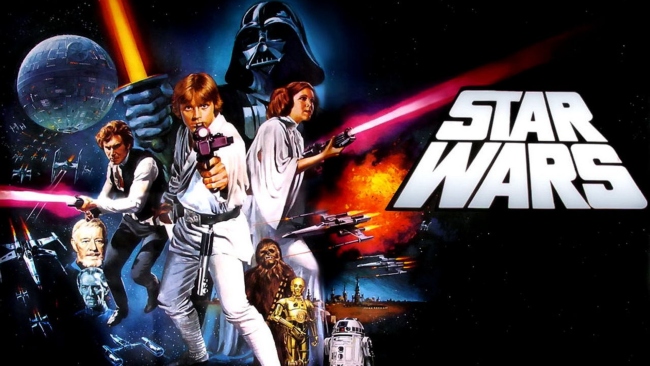
On its face, this sounds like a recipe for chaos and mass audience confusion. How will people keep up with all the different iterations of Star Wars out there? But there are precedents. Comics, for one, offer a roadmap. Characters like Batman and Superman have been around for decades, but in many cases, they haven’t had narratively contiguous stories from inception to present. Instead, countless creatives have taken the characters and told their own stories. Thus, characters die and come back, start good and turn evil, or evil and turn good, even take on new alter egos.
Granted, this is easier to do in a pages of a comic book than in other media, but by no means impossible elsewhere. Consider Spider-Man. In just the past decade, we’ve had the live-action MCU movies, in which Tom Holland plays Peter Parker, the Insomniac games, with Yuri Lowenthal as Spidey, the Spiderverse films, which feature numerous Spider-Man variants, and the animated Friendly Neighborhood Spider-Man show on Disney+. It’s possible to follow and enjoy all of these stories without getting flummoxed as to which is the “real” Spider-Man, because they’re all the real Spider-Man. It’s thus not a stretch to imagine, say, multiple Luke and Leia storylines co-existing, spearheaded by different creatives and told in different formats.
Star Wars: Visions shows the potential of a Star Wars unshackled from the burden of canonical obligations. As the Matt Martin tweet referenced earlier illustrates, Visions has been so innovative precisely because creatives don’t have to fit their stories into a timeline. This has allowed Star Wars to venture into untapped territory in both story—as in “TO-B1,” which sees a droid training in the ways of the Jedi—and form, as in “BLACK,” in which the trauma of war manifests as a sensorially overwhelming and narratively discombobulated battle between two stormtroopers.
Contrast the wide-open horizons of Star Wars: Visions with, say, Obi-Wan Kenobi. Kenobi has certainly gotten its share of unfair hate, particularly as far as Reva is concerned. Its story, though, is the equivalent of a camel going through the eye of a needle, and it shows. Deborah Chow and Co. had to navigate very tight canonical constraints when using characters like Obi-Wan and Darth Vader and Leia, which makes for peculiar or otherwise forced story choices, such as Obi-Wan choosing to walk away from rather than strike down Vader, or Vader’s conversation with the Emperor, which seems to exist solely to explain why the Empire doesn’t keep kidnapping Leia over and over.
Dispensing with canon altogether comes with risks. One advantage of adhering to a canon is that once a story is told, it can’t really be told again, thus forcing you to tell other stories. Without such constraints, it’s possible that creatives will err towards telling stories that they know Star Wars will like rather than taking chances, thus resulting in, say, countless reimaginings of A New Hope. There’s a version of this problem in Visions. Visions shorts have relied heavily on original trilogy iconography—X-Wings, TIE fighters, stormtroopers, Rebels vs. the Empire—at the expense of the prequel and sequel eras, and it’s hurt the storytelling. There are, in my humble opinion, too many shorts centered on a Jedi hiding from the Empire post-Order 66.
There’s also the possibility of making Star Wars more polarizing than it already is. Visions takes big swings sometimes, and they don’t always land with everyone. Emma Mieko Candon’s novel Ronin, for example, has its partisans (see: Drew), but also detractors who feel that it rewrites too much of the DNA of Star Wars (see: Brandon). “BLACK” met with generally positive reviews and is seen by many as the best short of Volume Three, but it also takes a lot of storytelling liberties (see: smooth jazz). The boundary-pushing that made me fall in love with Visions may be precisely what turns someone else off Visions.
It’s impossible to predict with any certainty how a “let it rip” approach to Star Wars storytelling would play out. But I think Visions shows that the opportunities outweigh the risks. For many fans, myself included, Visions has challenged their preconceived notions of what a Star Wars story can be. If nothing else, I hope that, in twenty or thirty years’ time, there will be Star Wars creatives who talk about watching Visions as a kid and how it inspired them to tell their own stories in their own style. If so, then it will have all been worth it.


