In the fifth and sixth episodes of Maul: Shadow Lord, entitled “Inquisition” and “Night of the Hunted,” survival forces characters to consider alliances with unexpected and uneasy partners, while simultaneously revealing new threats that will push those alliances to their limits. With the arrival of the Empire on Janix, the series reshapes its central conflicts and establishes the tensions that will carry through the remaining four episodes of the season and beyond.
ENEMIES
Prior to the Empire’s arrival on Janix, the season’s conflict centered largely on Lawson’s pursuit of Maul, as Maul sought to rise once more within the criminal underworld. The Empire’s invasion, however, fundamentally reshapes the opposition that will drive the story forward.
Most notably, it introduces a new tension rooted in shifting power dynamics. Before Lieutenant Blake and his forces arrived, the lines between good and evil were relatively clear. Maul was the antagonist, Lawson the protagonist, and their conflict was straightforward: Lawson sought to stop Maul because Maul was doing wrong. Simple. Clean. Understandable.
The Empire, however, muddies these waters. It does not prioritize justice or order—it prioritizes control. As Lawson explains to Two-Boots, the Empire’s presence is not about Maul alone. It is about tightening its grip on the galaxy through gradual, calculated domination of systems and planets.
Blake’s aggressive takeover of the Maul investigation—using protocol as justification to sideline figures like Lawson—reflects this deeper agenda. The stated goal may be to capture Maul, but the true objective is control of Janix itself. Anyone who resists that control becomes an obstacle to be removed.
This strategy is further reinforced through the introduction of the Inquisitor Marrok, whose mission extends beyond eliminating Maul and the Jedi. The Inquisition represents something larger: the consolidation of power under Darth Vader and Emperor Palpatine, ensuring that all Force-users fall under Imperial rule. Marrok, likely in communication with one of them at the end of “Night of the Hunted,” is already an instrument of their will. His presence on Janix may foreshadow their eventual involvement in the story.
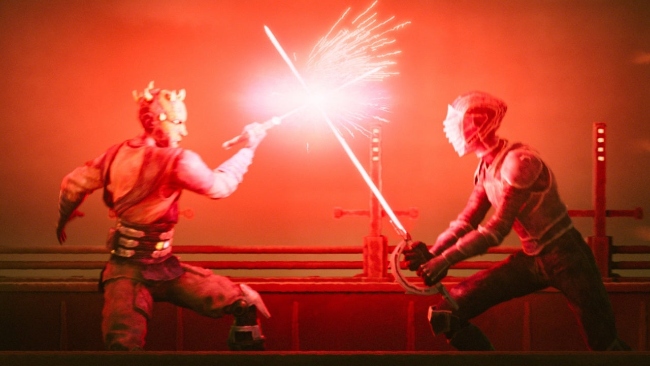
As Marrok hunts both Maul and the Jedi, he reinforces the story’s most critical opposition: the tension between Master Daki and Maul. This conflict, centered on Devon’s loyalties, is the narrative’s true fulcrum. Devon’s ultimate choice—whom to follow and what to believe—will shape the direction of the story moving forward. Though their rivalry is only briefly addressed onscreen, it underpins nearly every interaction and decision across these episodes.
As the season progresses, these conflicts will only deepen. Shadow Lord has already demonstrated its willingness to explore complex moral terrain, and as the Empire tightens its grip, the traditional boundaries between good and evil will become increasingly blurred.
Yet, the story is not defined by opposition alone. Equally important are the alliances formed under pressure—alliances that are fragile, uneasy, and often born of necessity rather than trust.
ALLIES
Among the alliances formed in “Inquisition” and “Night of the Hunted,” the partnership between the Jedi (Daki and Devon) and Lawson appears, at first glance, to be the most natural. Historically, the Jedi and law enforcement would operate in alignment. However, the shifting political landscape complicates that relationship significantly.
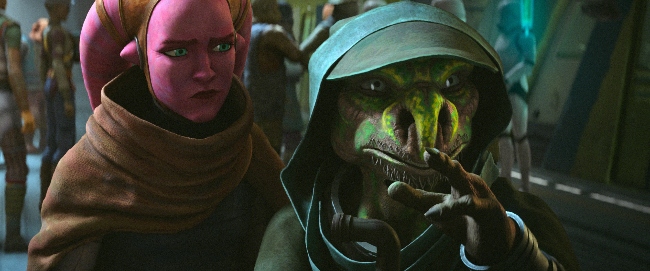
When the Jedi initially seek Lawson’s help, he refuses. He wants no involvement with individuals actively hunted by the Empire. That choice, however, is taken from him when Marrok arrives at his apartment. In that moment, survival replaces preference, and Lawson is forced into cooperation.
This dynamic defines the alliances in these episodes: they are not formed out of trust or desire, but out of necessity.
As Lawson, his son, and the Jedi flee from Marrok, they turn to one of Lawson’s existing contacts, Sul. While this may seem like a safe choice, trusting a former bounty hunter carries its own risks. This decision hints at a broader shift, one in which traditional lines between “good” and “bad” begin to erode, particularly as the Empire emerges as a greater, more oppressive threat.
Sul, while not directly tied to the criminal underworld as far as we know, represents the morally gray spaces of Janix. Her alliance with Lawson and the Jedi suggests a growing theme: survival may depend less on who someone is and more on what they are willing to do in a given moment.
This raises a central question moving forward: does trust shape the situation, or does the situation shape who we trust?
The answer to that question will likely be found not in these smaller alliances, but in the most significant and inevitable one of all.
ENEMIES TO ALLIES
Ultimately, these episodes are building toward a convergence between Devon and Maul. Their encounters, both physical and ideological, draw them closer together, not just in proximity, but in perspective.
By forcing them to fight Marrok together, the narrative creates space for Devon to consider Maul’s worldview. In a galaxy now dominated by an undeniable evil, a lesser evil can begin to appear justifiable—especially when both parties share the goal of opposing the Empire.
However, as Master Daki warns, this is an illusion. Maul seeks to dismantle the Empire for his own gain, driven by ego and ambition. Devon, as a Jedi, is motivated by justice and the desire to protect others. Their goals may align on the surface, but their intentions remain fundamentally different.
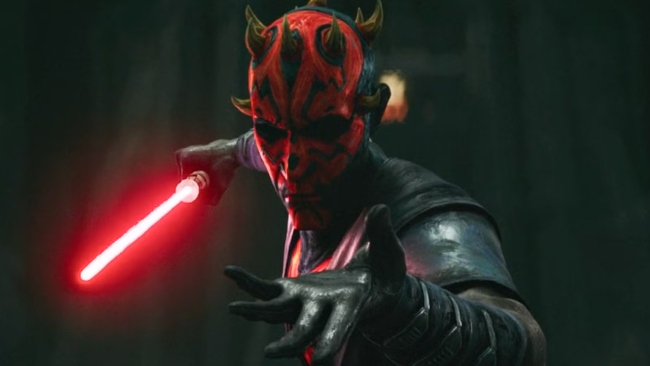
Still, Devon is at a point of uncertainty. As everything she once believed is called into question, she becomes more open to perspectives she would have once rejected outright. Whether she ultimately accepts Maul’s philosophy or resists it, their impending alliance will be pivotal in shaping the narrative.
CONCLUSION
“Inquisition” and “Night of the Hunted” do more than introduce new threats. They redefine the very structure of conflict within Maul: Shadow Lord. The Empire’s arrival dissolves clear moral boundaries, replacing them with a landscape where power, survival, and control dictate relationships. Enemies become allies out of necessity, allies become uncertain, and every decision carries greater weight.
At the center of it all lies a single, driving question: when the lines between good and evil are no longer clear, what truly defines the right path?
As the season moves forward, the answer will not come from the battles themselves, but from the choices characters make within them—choices that will determine not just who survives, but what they become.


