(This article contains spoilers for Trials of the Jedi.)
Trials of the Jedi, the latest and final installment in The High Republic saga, is one of the most important Star Wars books ever written. In fact, it may be the most important Star Wars book since the original Heir to the Empire by Timothy Zahn. To say the air where Trials of the Jedi lives is rarefied would be an understatement.
Unsurprisingly—especially considering that Charles Soule penned the novel—the book does exactly what it is supposed to do and so much more. It sticks the landing in a way that seemed impossible, satisfyingly concluding character arcs, plot elements, and themes while not just staying true to Star Wars but also reemphasizing some of its most important elements. No piece of art is ever perfect, but Trials of the Jedi has a case to be made for it.
This says a lot, considering the fact that Trials of the Jedi had a lot to accomplish. It had to put an end to the threats of Marchion Ro, the Nameless, and the Blight. It had to resolve internal conflicts for a multitude of characters, bringing this part of their story to a satisfying conclusion. And it had to set the galaxy up for what will come in the future fans know and love. What is truly amazing, however, is not that Soule accomplished his task, but rather how he went about doing so.
For one, Soule tied the threats of Ro, the Nameless, and the Blight together perfectly so that ending one threat would, in fact, end them all. In summary, Ro wants to end every life in the galaxy so that his will is the final note in galactic history. He has chosen to do so by killing all of the Nameless, which will lead to the Blight becoming uncontrollable. Eventually, the threat will conquer every planet, moon, and body in the galaxy to the point that Ro is the last man standing—literally.
What is compelling is that Soule actually makes the reader—who is well aware that the Star Wars story continues on after this era—believe that this is actually going to happen. The threat doesn’t come off as placated or fake. This is a real threat that could change the course of galactic history as it is known. Or, at the very least, it feels that way. That is not easy to do, but Soule does it with the stroke of a master.
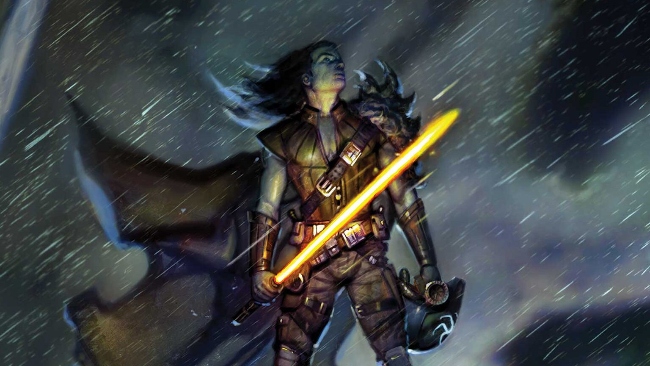
Of course, Ro’s dreams—which are the galaxy’s nightmares—don’t come true. Eventually, he is conquered by one Bell Zettifar, albeit Ro’s true loss comes at the hands of Avar Kriss and Elzar Mann, the two Jedi Masters that ultimately save the galaxy in the most Star Wars, “this is what a Jedi is supposed to be” way.
To understand the how and why, one must look back on the history of Star Wars, particularly as George Lucas created it to be. Lucas set up the idea that the Jedi are selfless, using their power only for the good of others. The ultimate version of this is Luke throwing away his lightsaber on the second Death Star—an act of selflessness and love that creates space for the redemption of Anakin Skywalker and the downfall of the Empire.
This idea is further expanded upon by Rian Johnson in The Last Jedi. In the film, Luke faces down his fallen apprentice and nephew, Kylo Ren, through a Force projection. Once more, Luke wins the day not by his strength with a lightsaber, but with his faith in the Force. That, in the end, is the Jedi way. When a Jedi has faith in the Force, trusting it completely, he, she, or they are able to use their power selflessly, showing love, compassion, and empathy toward those who need it most.
In the case of Trials of the Jedi, the galaxy needs a grand act by the Jedi once more. With the Blight progressing at a rapid pace, the Jedi take captured Nameless to Planet X because they believe that Ro taking the Nameless from the planet was the original sin that caused the Blight to arise. By returning the creatures, there is hope that the Blight will be stopped.
As it turns out, the Jedi are right. However, it really doesn’t matter because Marchion Ro is also on the planet, pursuing the opposite idea of the Jedi. Where the Jedi want to save every Nameless, Ro wants to murder them so that the Blight will become uncontrollable. Through the rod that he holds, which controls the Nameless’s actions, Ro has the Nameless turn on each other, leading to a slaughter wherein only one remains.
Elzar and Avar pursue that one into the forests of Planet X until they are transported to what appears to be another realm. Through their exploration, they come to the conclusion that they are actually walking in the dark side of the Force, at least as it is present on Planet X. Eventually, they are able to cross through to another part of the planet’s innards, where they find Nameless who are like nothing they’ve ever seen before.
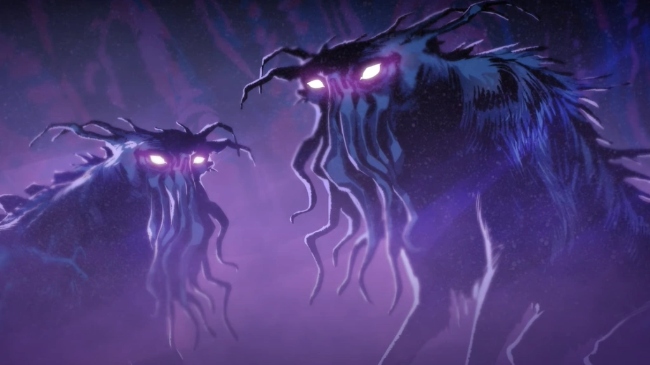
These Nameless, who are pure and unharmed, watch over a bowl of eggs of what will eventually be reborn Nameless. Whenever one Nameless dies, an egg is deposited for the pure Nameless to watch over and guard until it hatches. The planet, it turns out, will balance itself. The problem is not the Nameless, but rather that the ecosystem of the planet has been sent out of balance because the Nameless were removed. When left unmolested, Planet X—which is a vergence in the Force—will keep the light and dark sides in check, thus keeping the Blight itself in check.
The solution seems simple: leave the planet alone. That, however, was the answer for about four books ago. The problem in Trials of the Jedi is that it will take decades for the Nameless eggs to hatch; by the time they do, the galaxy will be destroyed by the Blight. The galaxy needs someone who can do the impossible. The galaxy, it turns out, needs the Jedi.
After discussing the conundrum with the pure Nameless, Elzar and Avar venture back into the dark side realm in order for Avar to seek the answer to the situation. Eventually, she finds the note she is looking for by connecting her consciousness with the man she loves, Elzar. Together, their power in the Force leads them to the answer: themselves.
As Elzar puts it, “It has to be us, Avar. You will be the light, and I will be the dark, and we will use our strength in the Force to maintain balance here on this world until the Nameless eggs can hatch.” Essentially, Avar will stay in the realm of darkness, being a beacon of light. Meanwhile, Elzar will return to the planet’s surface, embrace his inner dark side, and be the balance to Avar’s opposite.
This is, without a doubt, one of the most Jedi acts ever penned in Star Wars. Once again, as Lucas did with Luke in Return of the Jedi and Rian Johnson did with Luke in The Last Jedi, the Jedi win the day not with the blade of a lightsaber but with their faith in the Force. More to the point, they do it by willingly sacrificing themselves for the greater good.
The reality is that Elzar and Avar will likely never leave Planet X. They will remain there until they ultimately reunite with the Force in their deaths. They know this—that they will give up everything—and they do it anyway. Actually, they do it because of that. That is the cost of being a Jedi, and it is a price they willingly pay.

Their choice, and Bell Zettifar putting an end to the threat of Marchion Ro, will allow for the Nameless to be reborn, leads to the end of the Blight as a serious threat, and balances the Force once more. It is the perfect end to a near-perfect four years of storytelling. And it does something that Star Wars has been trying to do since the prequels: define the balance of the Force.
George Lucas believed that the light side of the Force was the balance. As the creator of the saga, he’s allowed to believe and portray in his story whatever he is inclined to. However, something about that never sat right. It didn’t feel natural to say that the light alone is balance, as that is inherently taking away the dark. One cannot know the sadness of rain without the joy of the sun. One cannot fully appreciate life without understanding its finiteness. And one cannot appreciate the power of the light without understanding that darkness exists as well.
Trials of the Jedi makes it very clear that balance in the Force is not equal parts light and dark, nor is it the light existing in absoluteness. Balance is exactly that—balance. The light exists, the dark exists, and the Force is able to do what it naturally wants to do.
There is an argument to be made that Trials of the Jedi supports the idea that the Force should be left alone—an idea that was presented via the Path of the Open Hand in Phase Two of The High Republic. The Path believed that using the Force in one place would have a butterfly effect that would negatively impact things in another place. Thus, they wanted Force users, such as the Jedi, to stop what they believed to be a bastardization of the will of the Force.
Come to find out, the Path was not completely wrong. While not an absolute truth, there are places—such as Planet X—where messing with the Force affects the rest of the galaxy. Does that mean that the Force should be left alone? As Soule presents it in Trials of the Jedi, absolutely not.
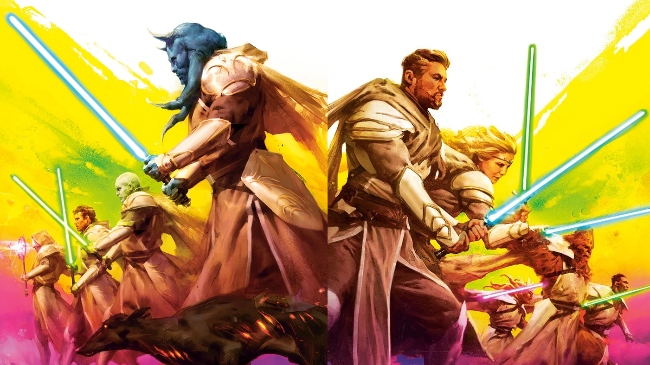
Instead, the galaxy needs the Jedi. In The Force Awakens, Lor San Tekka tells Poe Dameron that “without the Jedi there can be no balance.” The Jedi keep the dark in check, as it will spread when left uncontrolled. The Blight proves this. The Nameless becoming rabid monsters when taken from their planet proves this. The rise of Palpatine after the fall of the Jedi Order proves this.
The answer is not to get rid of the Jedi in order to bring balance, but rather to train Jedi to make the hard choices—to choose sacrifice, compassion, and pacifism. Too often in the prequel era the Jedi were trained to be soldiers and warriors. As Ahsoka states to Rex in season seven of The Clone Wars, “As Jedi we’re trained to be peacekeepers. But all I’ve ever been since I was a Padawan is a soldier.” The solution of the era was the lightsaber. As Obi-Wan tells Anakin, the lightsaber is a Jedi’s life. That is where the Jedi went wrong. Soule proves it in Trials of the Jedi.
Trials of the Jedi is not the end of Star Wars living and playing in the High Republic era. The initiative has been too successful not to continue telling stories in the era. Hopefully, more of those stories will center around ideas like those presented by Soule in Trials of the Jedi. Jedi acting the way that Luke, Elzar, and Avar do should not be a rarity. It should be the norm. Only then will the Force be able to truly remain balanced. Only then will the galaxy that is known for its wars be able to find peace.

 CLASHING SABERS