In “The Empire Strikes Back,” Yoda explains to Luke that he will be able to discern the good side from the bad when he is “calm, at peace, passive.” Up to this point, Luke has been unable to do so, as his focus has been solely on pressing forward and looking toward the horizon. Throughout the rest of the film, and even into “Return of the Jedi,” Luke continues down this path of pursuit over peace. He rushes off to save his friends and gradually, as we will see in “Return of the Jedi,” veers towards the dark side.
Luke never slows down enough to give himself the time to find calm and peace. He had the opportunity after the end of the Galactic Civil War, but it seems, based on the limited amount of content available during this period, that Luke continued to push forward. He searched for Jedi artifacts, built his Jedi Order, and sought Exegol to eradicate the Sith completely. It wasn’t until his unresolved tendency to rush into things finally catches up with him in Ben Solo’s hut that Luke finally halts and takes stock of what is actually happening. This leads him to his self-imposed isolation on Ahch-To and the subsequent events in the sequel trilogy.

Eventually, Luke does learn how to be “calm, at peace, passive.” However, he must overcome his past with Ben Solo and the mistake he later admits he made by isolating himself. Paradoxically, that isolation leads him to find his center. Therefore, he must strike a balance between acknowledging his mistake and understanding its importance in his life. This is an extremely relatable concept, as we all have experiences we wish had not happened to us but which ultimately shape us into better individuals through pushing us out of our comfort zones and into new growth and development.
Luke’s final act in “The Last Jedi,” where he achieves victory through meditation, is a testament to the truth and power of Yoda’s words. It is in that moment that Luke demonstrates he has finally learned the lesson, overcoming his own self-doubt, insecurities, and trauma. In this moment, Luke shows Rey, Leia, and the galaxy that the real adversary is not external, but rather internal. Luke comprehends his failure with Ben, but also acknowledges that Ben made his own choices. He recognizes that all he can do is accept his failure, find a way to forgive himself, and seek “peace and purpose.”
Rey Skywalker is uniquely suited to continue from where Luke left off and guide the Jedi in a new direction. While Luke always rushed into things, Rey is accustomed to waiting. She spent decades waiting for her parents, displayed tremendous patience when Luke initially refused to train her, and never loses faith that Ben Solo will turn to the light. This patience, a form of faith in itself, pays off at the end of “The Rise of Skywalker” when Rey, strengthened by the Jedi who came before her, completes Luke’s mission to end the Sith.
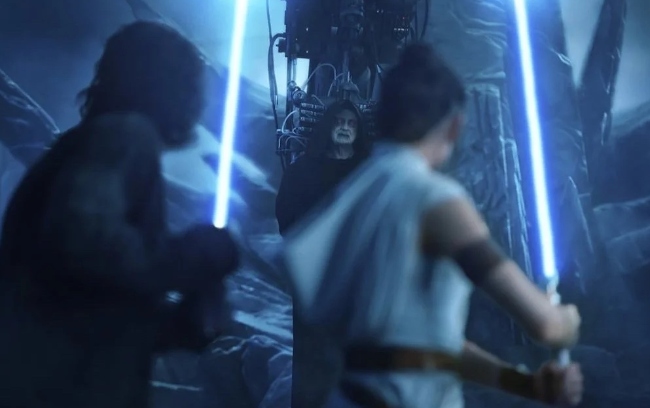
However, this doesn’t mean it came easily, or that Rey is beyond reproach or infallible. While the final moments of “The Rise of Skywalker” depict her being “calm, at peace, passive,” the film overall shows her losing that center, which was her driving force in “The Force Awakens” and “The Last Jedi.” Instead of showing the patience she once did, Rey tries to rush off without her friends, refuses to wait to get onto the remnants of the Death Star, and even contemplates making the same mistake Luke did by attempting to isolate herself on Ach-To.
The difference between Rey’s actions and Luke’s lies in the continuity of Luke’s behavior versus the momentary nature of Rey’s. Luke consistently rushed into things and rarely learned from such failures as he should have. Rey, on the other hand, consistently displays patience in assessing situations before taking action and learns from her mistakes. For instance, her failure to redeem Ben Solo in “The Last Jedi” teaches her that it is not her responsibility to redeem him, prompting her to stand firm against Kylo Ren when necessary while also showing empathy towards Ben Solo, such as when she heals the lightsaber wound she caused.

Does this mean that Rey is a better hero, person, and/or Jedi than Luke was? Absolutely not. Rather, it underscores the idea that there are different types of heroes, just as there are different types of people and, ultimately, different types of Jedi. What shapes who one becomes is the continual pursuit of growth and an understanding of one’s place in that journey, a trait shared by all heroes, including both Rey and Luke.
This pursuit encapsulates the true essence of Yoda’s message to Luke when he tells him that he will discern the good from the bad through passivity. It is not about a singular moment, nor is it about getting everything right every time. It’s about trying, doing, and evolving. It’s about the journey, as some would say, and not just the destination.

 CLASHING SABERS