The fall of the Jedi is a nuanced and ever-evolving story that grows deeper with each new Jedi story told. From Ahsoka to Cal Kestis, from Obi-Wan to Anakin, each Jedi had their own strengths and weaknesses that eventually led to their downfall. Thus, when considering the root problems of the institution itself, one must look at common elements between the characters to find the common denominator.
Said denominator becomes increasingly obvious when one juxtaposes the fall of Anakin in Revenge of the Sith with the success of Luke Skywalker in Return of the Jedi. Why, when presented with similar scenarios, do the two characters make such different decisions? The answer lies in the distinction between attachment and connection.
During the era of the prequels, and even before that in The High Republic, the Jedi forbade attachment. It was viewed as dangerous and an element of the dark side. They were not completely wrong in that regard. However, as time went on and the Jedi Order became more dogmatic, the line between attachment and connection became indistinguishable.
But that line is extremely important because it is the difference between engaging in relationship, romantic or otherwise, from the lens of selfishness versus that of selflessness and giving. Attachment is selfish, as it is about holding onto something or someone in a possessive manner and feeling as though one cannot survive without said thing or person. Connection, on the other hand, is selfless, as it is about giving oneself to another person and understanding the mutual value that comes from a healthy relationship dynamic.
As Dr. Amir Levine and Rachel S.F. Heller describe in their book, Attached, humans are shaped by their attachment style, be it secure or insecure. A secure, or healthy, attachment style comes from being raised in an environment where one’s needs are met, concerns are validated, and love is given consistently and unconditionally. Insecure, or unhealthy, attachment styles come from being raised in an environment where one’s needs are not met, one’s concerns are not validated, and/or love is not given or given conditionally. These insecure attachment styles are further broken down into anxious attachment, wherein one desperately craves emotional intimacy and closeness for fear of losing whomever one is attached to, and avoidant attachment, wherein one pushes away from emotional intimacy for fear of the hurt it can cause. By taking children from their families and raising them in a constant state of avoidant attachment, the Jedi never allowed for their pupils to create secure bonds.
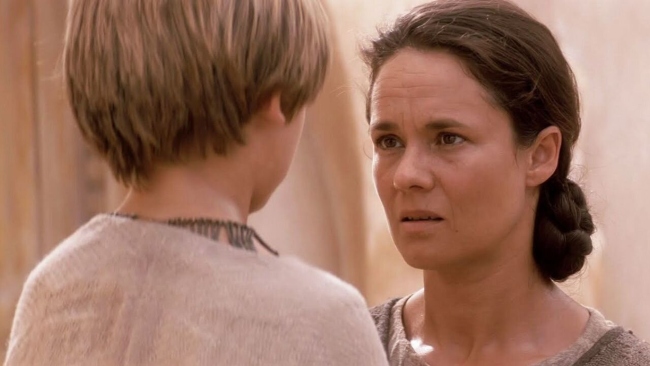
Growing up on Tatooine with Shmi, Anakin was building a secure attachment style. He had connection with his mother, his friends, and his community. Despite his status as a slave, he had unconditional love from his mother, as Luke had from Aunt Beru and Uncle Owen. When Qui-Gon takes Anakin to be a Jedi, Anakin is capable of leaving his mother because of their secure bond, as well as the secure bond he is building with the Jedi Master. Both of those bonds are brutally ripped away from him, shaking him to his core. From here Anakin moves toward a much more possessive sense of attachment and an anxious attachment style. He becomes possessive over Padmé and fears losing her as if it will end his very being.
On her podcast “Do the Work” Sabrina Zohar unintentionally describes Anakin’s attachment to Padme in saying, “When you attach to things then that means you’re telling your nervous system ‘I’m only okay if I have this.’” By attaching to Padmé in such an unhealthy manner, Anakin opens himself to a following a very dangerous path. But Anakin is not alone in losing the ones he loves. When Aunt Beru and Uncle Owen are brutally murdered by the Empire, Luke is put in a similar situation. Why, then, does Anakin go to the dark when Luke is able to maintain his relationship with the light?
The difference comes down to what replaces those bonds that they lose. At the end of The Phantom Menace, Anakin is left with the Jedi Order as his main source of connection. That Order built an avoidant attachment style within itself because of the fear of the insecure form of attachment. But Luke’s relationship with his aunt and uncle is replaced by a secure connection with Han and Leia. Luke never feels like he has to cling to his them because they constantly show up for him in a way that Padmé is not able to for Anakin because of the secrecy and taboo surrounding their relationships (a problem that likewise falls at the feet of the Jedi Order).

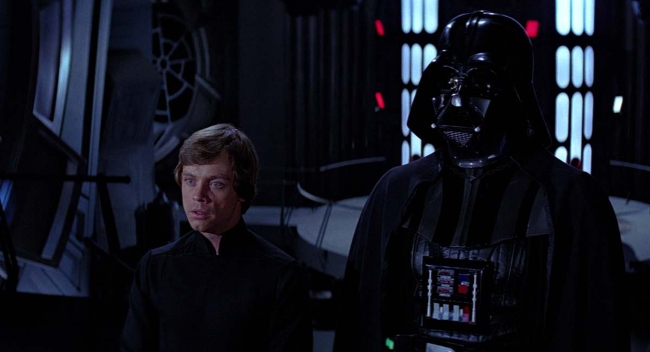
In the throne room of the Second Death Star, Luke is able to show his father the difference between being secure and insecure, between connection and attachment. Luke enters that cave of darkness knowing that he will most likely die in trying to redeem his father, but doing it nonetheless. This unconditional love reminds the Anakin deep within the mechanical facade of Darth Vader of the love he had from Shmi, who gave everything she had simply to provide a better life for her son. This act heals the wounds within him, the wounds exploited by Palpatine for decades, and creates space for Anakin to sacrifice his life in order to save his son.
Much of life comes up to circumstance, but a lot also comes down to the choices one makes. While there are similarities between Anakin and Luke’s journeys, the important distinction comes down to their choice between connection and attachment. Anakin, raised as a Jedi, develops unhealthy attachment and brings the Order to its knees. His son chose connection over attachment, and thus saved the galaxy.

 CLASHING SABERS
One thought on “Attachment, Connection, and the Fall of the Jedi”