Stories, on the whole, are about identity. Regardless of the kind of arc they follow, characters are constantly discovering things about themselves, evolving, and growing in ways that enthrall the audience and compel them to watch further. Maul: Shadow Lord, the new Star Wars animated series on Disney Plus, will be no different—at least on the surface.
While characters such as the titular Maul will certainly go through some kind of evolution, the first two episodes of the series, released on April 6, 2026, point toward a different aspect of identity that the show will deal with: shadows.
According to Swiss psychiatrist and psychoanalyst Carl Jung, everyone has a “shadow self,” which is defined by the unconscious, repressed part of one’s personality. The shadow self contains traits the conscious ego does not recognize or accept. Essentially, the shadow self is one’s dark side that is often projected onto others to blame them for faults that are actually present in oneself. Jung’s work involved “shadow work,” which includes acknowledging these dark elements and integrating them to achieve wholeness and self-acceptance.
In the first two episodes of Maul: Shadow Lord, it is abundantly clear that dealing with the shadow self is going to be a key element in the series moving forward, as everyone has a part of themselves that they are hiding. In fact, the one character who does not seem to be hiding who he is, Deemis, dies quite quickly in the show. Meanwhile, counterparts like Vario hide who they are in various ways. For Vario, that means hiding in a machine body, but for other characters, it goes far deeper and becomes more compelling.
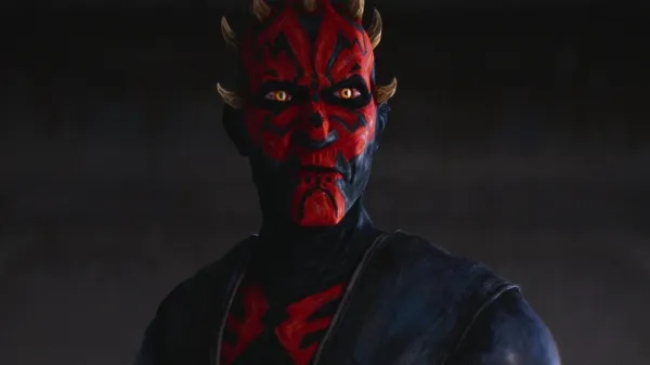
The three main characters that the first two episodes of the series—and likely the series as a whole—focus on are Devon Izara, a former Jedi apprentice in hiding; Brander Lawson, a local police officer; and Maul himself, who is working to exact revenge on the crime syndicates that betrayed his Shadow Collective initiative after his fall from disgrace. Each of these characters has a critical shadow element to them—a part of themselves they are hiding—that makes them intriguing characters for audiences to follow for the remainder of the season and series.
For Devon, her shadow is quite apparent. After somehow surviving Order 66 with her master, Eeko-Dio Daki, Devon is hiding the self that she has always known as a Jedi. The galaxy that she once knew is gone, and she is clearly angry about it and unsure of what to do. Unlike other Jedi survivors who’ve been explored across Star Wars media—and even unlike Master Daki—Devon seems to be developing a sense of reality wherein survival comes before ideals. Her frustration with her master, who believes that upholding Jedi principles is still the most important thing, is obvious when she goes against his directive to steal some food from a local vendor, which leads to her getting caught and imprisoned.
This leads to her interacting with Brander Lawson, a local law enforcement official who has a shadow in his own right, albeit less obvious than Devon’s. A “street-wise detective who has been a cop for a long time,” Lawson is clearly someone who cares about his career quite a bit and takes his work very seriously. However, it appears that it has become his entire identity—or at least the main part of it—when he goes home to see his son, Rylee. In this scene, Lawson’s shadow is revealed, as it is shown that he is a single father who clearly has issues with Rylee’s mother, since he does not allow his son to visit her alone. Struggling to do his best while also trying to be a career man and a father, it turns out that fatherhood is Lawson’s shadow self.
As the show continues, Lawson is going to have plenty of work to hide behind because of Maul, formerly Darth, who is working to exact revenge on the criminal underworld that betrayed his Shadow Collective after his defeat at the hands of Darth Sidious, whom Maul is also trying to exact revenge on. Maul, unlike Devon or Lawson, wears his shadow like a badge of armor. He even talks about wanting to stay in the shadows for the time being, waiting to reveal himself until the moment is right. Whether he realizes it or not at this point, doing so will force him to confront parts of himself—traumatic parts, in fact—that he has pushed down and aside for years, leading to the evolution from the character audiences watched in The Clone Wars to who Maul is in Star Wars: Rebels.
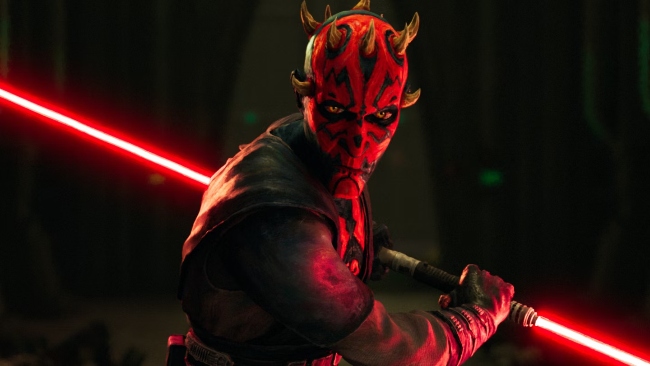
Regardless of the differences between their shadow selves, each of these characters will have to confront said shadow in order to become who the series is evolving them into. Visually, the series has begun to show that with the use of spheres and circles, which represent wholeness and unity of self.
These shapes are ever-present in the first two episodes. The first shot of the series, in fact, shows that the planet Janix is laid out in a circle. Later, the police station is shown to be a sphere at the center of a circle. The prisons that Maul keeps Vario and Devon in are circular. The ball on Lawson’s desk, which connects back to his son and shadow self, is spherical. Even Maul’s brushstrokes with his lightsaber seem to be wider and more circular than ever before. In almost every scene, some kind of circle or sphere is shown, thus implying the importance of their meaning to the series.
In all likelihood—because it is both good storytelling and what the show appears to be setting up—each of the main characters will be confronting their shadow self in order to become a whole person who has integrated their conscious and unconscious selves. For Devon, this will be figuring out who she is post–Order 66, with Maul at the helm of helping her shape that identity. For Lawson, it will likely mean having to choose whether his ultimate priority is going to be his son or his career. And for Maul, it will mean identifying who he is capable of being after his fall from power.
What the show has the chance to do—and what makes it an interesting story to tell within the realm of Star Wars—is show characters failing at this. More often than not, Star Wars stories are about succeeding and gaining hope through the lessons learned along the way. However, Maul as a character is different in that he is Sisyphean, constantly doomed to fall short of his goal. Therefore, it is clear that regardless of what he tries to accomplish, Maul can only go so far in his journey before he falls back down again. Could this set the precedent for his counterparts in Devon and Lawson as well?
The next month will reveal at least part of the answer as the show continues to release episodes in its two-per-week format between now and May the Fourth. Whether or not it will all come to fruition, though, remains to be seen, especially considering that season two has already been announced. Regardless, the first two episodes of the show laid the foundation for a compelling journey for the protagonists and antagonists of this part of the Star Wars saga. As Devon, Lawson, and Maul each develop into who they are becoming—confronting their shadow selves in the process—the true themes and lessons of Maul: Shadow Lord will come to the fore. Hopefully, it will do what the first two episodes of the epic series did: leave audiences craving more.

 CLASHING SABERS