Darth Vader is my favorite Star Wars character. This is my one inviolable Star Wars opinion. Movie and show rankings will change, empires will rise and fall, but Darth Vader will always be my favorite Star Wars character. My earliest Star Wars memory is watching A New Hope on TBS Superstation and seeing Darth Vader board the Tantive IV. He became my favorite character there and then. I probably have hundreds of Darth Vader action figures, Funko POPs, helmets, mugs, and other collectibles you didn’t even know they made.
And even I was apprehensive when Master of Evil was announced.
The choice of author calmed many of my nerves. Adam Christopher became an instant personal favorite after Shadow of the Sith released in June 2022. Shadow of the Sith is a strong “yes, and…” to the stories, characters, and ideas introduced in The Rise of Skywalker. Where too many people have been content to complain about “retcons,” Shadow of the Sith takes lines like “they sold you to protect you” and thoughtfully interrogates what they mean. For me, Shadow of the Sith also cemented Adam Christopher as the dark side author of the moment, with his exploration of the elusive Sith Eternal. If there was anyone I trusted to write a Darth Vader book, it was Adam Christopher.
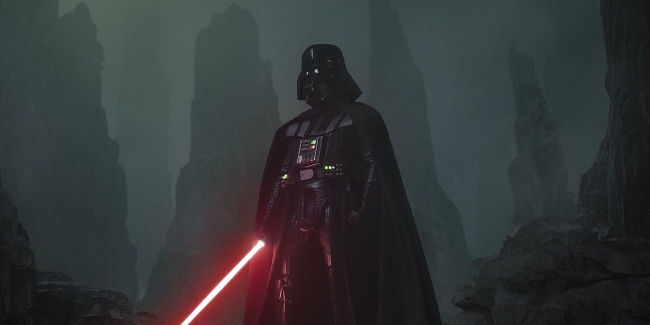
Still, like many people, I was asking myself, “Do we need a Darth Vader book?” There’s been a lot of storytelling involving Darth Vader in the Disney era — he’s appeared in shows (Rebels, Obi-Wan Kenobi), video games (Vader Immortal, Jedi: Fallen Order, Jedi: Survivor, Outlaws), multiple comic series and one-shots (Darth Vader (2015), (2017), and (2020), Dark Visions, Black, White, & Red), even other books (Lords of the Sith). Even as a Darth Vader superfan, it felt to me that there weren’t any more interesting things you could do with Darth Vader in 2025.
I was wrong.
For me, Master of Evil was the biggest Star Wars surprise of 2025. Shadow of the Sith set high expectations for Adam Christopher’s second Star Wars book, and Master of Evil shatters them. There’s so much that Master of Evil does well — I could devote an entire article to TC-99 alone. But the cornerstone of its triumph is that it understands that to use Darth Vader well, you must use him carefully.
Villain protagonists are tricky. It’s no coincidence that Delilah Dawson’s Phasma isn’t told from Phasma’s point of view, nor that most of Inquisitor: Rise of the Red Blade takes place before Iskat Akaris becomes the Thirteenth Sister. Villain origin stories can be quite compelling — Anakin Skywalker’s transformation into Darth Vader is one such example — but once the protagonist assumes the villain mantle, it can be hard to sustain interest. Stories rely on the growth and development of their characters for forward momentum. With villains, though, unless and until they encounter obstacles and setbacks or see the error of their ways, their characterization is pretty static. There’s only so much doing and reveling in evil that a reader or viewer can stomach.
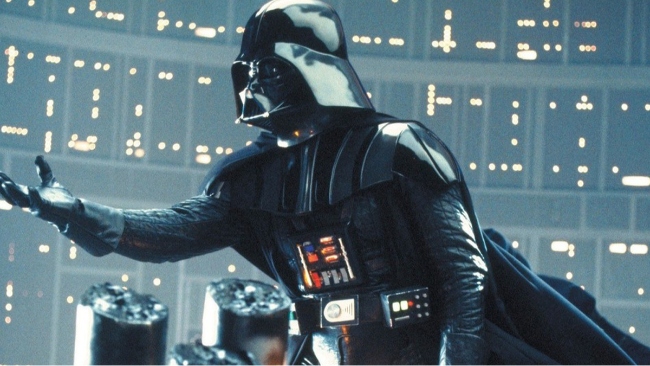
Darth Vader is no different. His motivations in Master of Evil are nothing new. Turned by the promise to cheat death and devastated by the loss of Padmé, Darth Vader pursues an ethereal dark side power after discovering that his new master is, shockingly, not a man of his word, believing that this power will resurrect the love of his life. The Vader comics have explored ad nauseam how the trauma of Padmé’s death informs many of Vader’s actions, including his partnership with Sabé, a woman who literally looks like Padmé. Moreover, because Master of Evil takes place in the immediate aftermath of Revenge of the Sith, there’s only so much evolution that Vader can undergo — this is true of pretty much any Vader-centric media that precedes him meeting Luke. (I will argue later, though, that Vader does have a character arc in Master of Evil.)
Adam Christopher sidesteps these storytelling constraints by recognizing that the most interesting thing about Darth Vader isn’t Vader himself, but how he affects those around him. This has been true ever since the original trilogy. The prospect of becoming another Vader forces Luke to confront and ultimately let go of his fear and anger. Vader’s revelation that he is Luke’s father triggers a split between Luke and his Jedi mentors and leads Luke to start thinking more for himself. Vader’s arrival on Cloud City makes a traitor out of Lando and pushes Han and Leia to finally admit their feelings for each other. Obi-Wan Kenobi isn’t compelling because Vader is brought face-to-face with his one-time brother who left him for dead on the shores of Mustafar — it’s compelling because Obi-Wan has to deal with the fact that his one-time brother who he left for dead on the shores of Mustafar is now a walking nightmare.
None of this is to say that you can’t do compelling point-of-view storytelling with Darth Vader — you can find it in the 2015 and 2017 Vader runs and in some of the 2020 run. But a lot of latter-day Darth Vader storytelling has devolved into “here’s Darth Vader doing badass Darth Vader stuff” — this is the fatal flaw of Black, White, & Red, and part of why the quality of the 2020 run takes a massive nosedive.
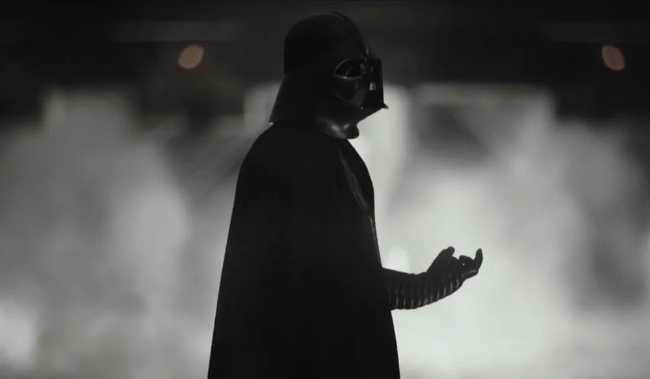
Darth Vader does badass Darth Vader stuff in Master of Evil, including, but not limited to, dueling a vision of Anakin Skywalker. But Adam Christopher doesn’t rely on badassery. Rather, the people around Vader propel the story. The beating heart of Master Evil is Halland Goth, head of the Emperor’s Royal Guard, who’s looking for prestige in the nascent Empire and a cure for the disease that’s killing him. Through Goth and his friend, the manumitted protocol droid TC-99, we see how the Imperial rank-and-file grapples with the abrupt appearance of Darth Vader. No one outside of the Emperor knows who Vader is or where he came from — he manifests at the Emperor’s side literally from one day to the next, and everyone in the new Imperial hierarchy must bend the knee to him. Tasked with monitoring Vader’s activities, Goth quickly learns that Vader and the Emperor are not a united front, forcing Goth to decide where his loyalties lie. All the while, Goth and TC-99 attempt to piece together as much information about Vader as possible. (Who doesn’t love a detective story in Star Wars?) There are lots of great droid-organic friendships in Star Wars, but Goth and TC-99 might be one of my favorites, because it’s a friendship of equals.
Goth accompanies Vader on his quest for the dark side power out of duty and hopes that Vader can find knowledge that will prolong his own life. Over the course of Vader’s quest, though, Goth uncovers the rot at the core of the Empire. Palpatine sold the Empire as a means of achieving peace, security, and justice, when in reality, the goal of the Empire is power by any means necessary.
Master of Evil should be considered a companion to Alexander Freed’s Reign of the Empire: The Mask of Fear, which was also released in 2025. Read together, they offer a comprehensive look at the Empire’s early days while also revealing the complex and fraught architecture of the Galactic Empire. On the one hand, as we see in Mask of Fear, the Empire aspires to be a rational bureaucracy and has to navigate thorny politics to keep its constituent systems in line. On the other hand, as Master of Evil underscores, the entire ship is helmed by a wizard and his robot sidekick. This tension is, in important respects, the source of the Empire’s eventual collapse. (Chris Kempshall explores these dynamics wonderfully in The Rise and Fall of the Galactic Empire.)
Among Master of Evil’s many surprises is that it makes you have feelings about Appo. CC-1119 first appears in Revenge of the Sith, where he confronts Bail Organa during the attack on the Jedi Temple and is taken out by George Lucas’s son. He’s also in the Umbara arc of The Clone Wars. In Master of Evil, we learn that Appo survived Order 66 and leads Shadow Platoon, the successor to the 501st Legion, though he now sports a prosthetic leg thanks to the antics of George Lucas’s son. Appo and Shadow Platoon accompany Vader on his mission. Through The Bad Batch we’ve learned a lot about how the rise of the Empire impacted the clones. Still, it’s refreshing to get the perspective of a “reg” who’s still on the inside. Appo’s relief that his prosthesis has given him another chance to serve is poignant knowing that every clone, able-bodied or otherwise, is destined for obsolescence.
Appo, of course, has no idea that he’s still serving under Anakin Skywalker. Despite everything that’s changed, though, he and Vader develop a rapport. Vader even performs a rare act of compassion, stopping to repair Appo’s leg after it’s been damaged. Whereas Goth grows revolted by what the Empire represents, Appo develops respect for Vader. Appo allows us to better understand how Vader integrates himself into the Imperial hierarchy and comes to command the loyalty of his subordinates. The threat of Force choking helps, sure, but fighting side-by-side in the battlefield is also crucial.
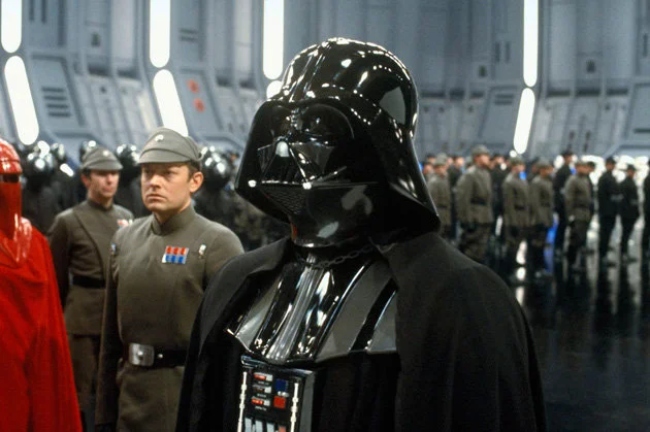
As much as I was loving Master of Evil, as I neared the end of the book, I started asking myself whether Darth Vader actually underwent any sort of meaningful character journey. He wasn’t the main protagonist, so it wasn’t a dealbreaker if he didn’t. Still, it’d be nice if something about him were different by the end. And I think there is.
Master of Evil opens with a prologue about Count Dooku. Needless to say, this was unexpected. Dooku is one of Star Wars’s most fascinating villains because, for all the Dooku-related media that exists (The Clone Wars, Dooku: Jedi Lost, Tales of the Jedi), he remains enigmatic, especially when it comes to his tenure as Darth Tyranus. What was his endgame? In Attack of the Clones, he tells Obi-Wan that together they will destroy the Sith. While I don’t believe that he was 100% honest with Obi-Wan about his intentions, I’m also skeptical that he was 0% honest. The Clone Wars drains away some of Dooku’s complexity, portraying him as a one-dimensional stooge of Darth Sidious.
Master of Evil shows a different side. Darth Sidious sends Dooku to the planet Diso to locate a vergence in the Force. Dooku finds the vergence, the locus of the dark side power that Vader later hunts, in a temple. Using the Force, he raises the entire temple onto a Separatist ship and sends it to hide out in hyperspace. Dooku speculates that he might return to Diso one day to study the planet further, “and perhaps he would have his master at his side. Or perhaps he would be the master then.” When he reports back to Sidious, Dooku claims that the transport carrying the temple was destroyed in hyperspace, opting to hoard the power for himself. Master of Evil, then, reveals that Dooku did contemplate eventually betraying and supplanting his master, in the proud tradition of the Sith.
Along with setting up the main story, the Dooku prologue foreshadows Vader’s journey in Master of Evil. At the beginning of Master of Evil, Vader trusts that Sidious will hold up his end of the bargain and reveal the secret to cheating death. Sidious, fittingly, mocks him for this, saying, “You were enamored with that story, were you not?,” referring to the tragedy of Darth Plagueis the Wise. When Vader goes to Diso, he finds and captures a shaman who can seemingly resurrect the dead but doesn’t tell Sidious, instead stashing him away for interrogation. At the end, after the Separatist transport is destroyed and the temple along with it, Vader returns to Sidious and presents him with a single piece of stone, tossing it to the ground with a derisive “Here is your temple,” which Sidious greets with his trademark cackle. By this point, Vader seems to have accepted that his master has deceived him, and that if he’s going to learn how to cheat death, he’ll have to do it on his own.
Master of Evil cements Adam Christopher as one of the most important Star Wars authors right now. He effectively uses genre to lend a fresh perspective on the Force — Shadow of the Sith leans heavily into the fantasy of science-fantasy, while Master of Evil has strong eldritch horror elements. He’s also adept at writing legacy characters like Luke Skywalker and Darth Vader. I couldn’t be more thrilled that he wrote a Darth Vader book, and that he did justice to my favorite Star Wars character. I certainly hope that he’ll write more Star Wars in the future. But Master of Evil will be a tough act to follow.
1- Adam Christopher, Master of Evil (New York: Random House Worlds, 2025), 8.
2- Christopher, Master of Evil, 37.
3- Christopher, Master of Evil, 364.
 CLASHING SABERS