If you would like to support our fundraising raffle and help us put Star Wars books into the hands of kids (while winning some amazing prizes!) follow this link!
Tales of the Underworld, which released on May 4th, tells an interconnected story that offers more than just narrative entertainment. The shorts invite a deeper reflection into the human (or galactic) condition. At the heart of the shows lies a question that it begs be answered: how do the choices we make—particularly those centered around the pursuit of love and belonging—shape the trajectory of our lives?
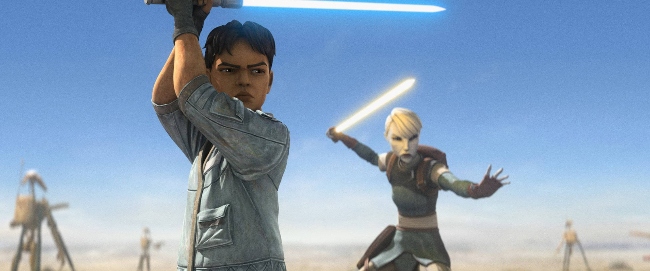
The first arc, which centers around the revived-from-the-dead Asajj Ventress, explores a character whose return from the underworld comes at a cost. By returning to the land of the living, Asajj has to sacrifice her ability to be with Quinlan Vos, the man she loves. Her arc, however, leads her to a new connection with a Jedi on the run. With him, they navigate the trials of searching for the Path, an Underground Railroad of sorts that is working to get Jedi who survived Order 66 to safety. Along that journey, Ventress finds someone who can love in a new way, thus broadening her character in unexpected but not undesirable ways.
In contrast, the second arc, which follows a young Cad Bane as he becomes the villain audiences know and love, follows a character who finds meaning—dark as it may be—in betrayal. Bane sacrifices his closest friend to the police in exchange for the opportunity to pursue a life of personal gain. Though he achieves what he thinks he wants, he pays dearly in losing his friend, his mentor, the woman he loves, and his own son.

In the beginning of the Ventress episodes, Mother Talzin tells Asajj that to return to the living, she must give up her “heart’s desire.” Essentially, Talzin is telling her that she has to give up her chance to be with Quinlan Vos. This is why she doesn’t go with the Path at the end of the third episode.
Bane learns a similar lesson. To have the life that he thinks he wants—the “good life” that his mentor promised him when Colby was but a street rat—he has to sacrifice love in its many forms. He loses the love of a friend, a mentor, a partner, and a child. The galaxy tried again and again to give the love that Talzin told Ventress was a gift to her when Quinlan said that he would always love her. Bane was just too stubborn to accept that gift like Ventress did.
As is often the case with tragic narratives, the choice between life and death comes with conditions. In this particular narrative, that condition is the inability to be with someone whom one loves. Because Ventress honors her commitment to this tragic choice, she is rewarded with the kinship of Lyco. Because Bane dishonors the gift of love the galaxy continually tries to bestow upon him, he is damned to live the rest of his days a lonely, bitter, condemned man.
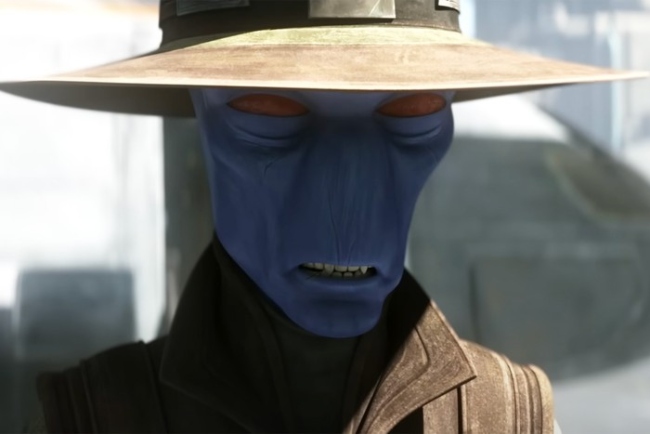
Each of the seasons of the Tales of anthology uses parallel storytelling to draw thematic connections between its characters. Tales of the Jedi explored the diverging paths of Count Dooku and Ahsoka Tano—two Jedi who questioned the Order while coming to radically different conclusions about what they should do about it. Tales of the Empire juxtaposed Barriss Offee and Morgan Elsbeth as they traveled paths of loyalty, loss, and the deception of power’s promise. Tales of the Underworld continues this tradition by paralleling Ventress and Bane as they grapple with the consequences of their choices, particularly those around love, identity, and belonging.
Ventress has always been a complex character, known for her shifting allegiance that led to moral ambiguities. But this version of her—which we got but a glimpse of in The Bad Batch—is more cautious and introspective. She has come to understand the galactic consequences of her choices, thus intentionally distancing herself from others. Through her bond with Lyco, she comes to the powerful conclusion that love does not have to be romantic to be powerful. While she cannot be with Quinlan Vos, she can still connect with someone who sees her as a friend rather than a weapon to be wielded.
This is a crucial shift in how Star Wars frames love. Ventress’s story communicates that isolation is not penance, just as it says that healing requires connection. Her arc is quiet but heroic in how it shows that redemption does not always end with reunion. It can, at least sometimes, end with the acceptance of new forms of love.
Cad Bane’s arc offers no such solace. His is a tragedy of classic proportions. Unlike Ventress, Bane does not evolve. Instead, he refuses to reflect, to change, to take a different path. He chooses to continually hurt others, and thus hurt himself. The end that he eventually comes to in The Book of Boba Fett is appropriate and inevitable because Bane, unlike Ventress, chooses pride and vengeance over redemption.
In the broader narrative that is Star Wars, these stories reinforce an ever-potent truth: our choices define us—particularly those around who we love and who we decide to make sacrifices for. Tales of the Underworld invites viewers to engage with that truth more reflectively than many pieces of art would dare to risk. All the while, the themes aren’t hidden. They are right there, but only if we, unlike Bane, are willing to see them.

 CLASHING SABERS