Now that Skeleton Crew has reached its finale, one can look back on the entirety of the story to see what a beautifully well-made tale the story of Wim, Fern, KB, and Neel truly is. Not only does it feel like Star Wars, but it also brings Star Wars back to its core elements of hope, adventure, and the power of belief. These core elements, which the finale itself presents in tremendous fashion, have been present in Star Wars since the moment that one Luke Skywalker looked out at the twin suns of Tatooine. Every great Star Wars story, in some way, shape, or form, has attested to their importance to the galaxy far, far away.
It would be easy, despite how well-made, written, and produced Skeleton Crew is, to brush it off as a show about kids or a story made for children. One would not be wrong in saying these things; however, one would be missing the point of Skeleton Crew if using such semantics to ignore the impact the story can have on oneself. Skeleton Crew is absolutely made for kids. It is made for the kid inside of us, to remind us of what we learned growing up with Star Wars. That is its greatest strength, and to diminish that because of the target audience would be foolish.

The reality is that Skeleton Crew does just about everything well. The score is John Williams 101 without being an imitation of the original trilogy. The writing is clear, concise, and to the point. The visuals and cinematography, particularly those on At Attin, which are meant to shake one awake because of how shockingly un-Star Wars they appear to be, speak where the characters don’t. All of it just works.
As great as all of those elements are, though, the greatest strengths of the show are the acting and directing. Jude Law is obviously fantastic, but greater credit goes to the casting team for finding not one, but four fantastic child actors to portray the four protagonists of the show. Without them, the power of the writing, the beauty of the score, and even the power of the visuals all fall short. The casting crew was, like the children are in the series, tasked with an insurmountable mountain to climb, which they faced head-on and succeeded in, despite the odds being worthy of C-3PO-level panic.
With all of these factors in place—which is a miracle in and of itself—the story of Skeleton Crew is able to take us back to our Star Wars roots, letting said roots wrap around us like the warm embrace of a Wookiee hug. The show is, in the end, another iteration of the Hero’s Journey that has permeated Star Wars since A New Hope. Nevertheless, it follows this path in a new and interesting way, while expanding on the mythos of Star Wars in a number of ways, such as the creation of planets considered the “Jewels of the Republic.”
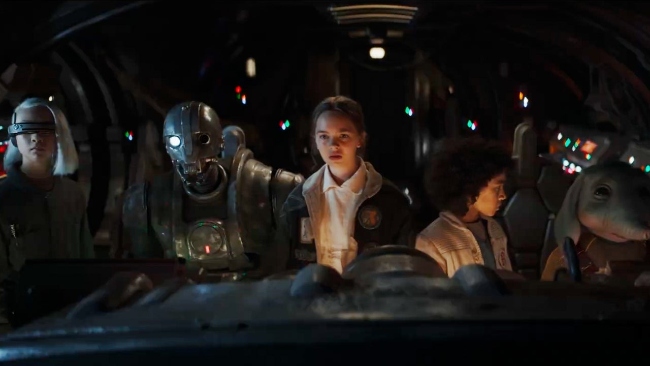
When considering the Hero’s Journey specifically, Skeleton Crew breaks the Star Wars pattern of having singular characters go on their own hero’s journey by having the four kids all presented as equally significant and important protagonists. In A New Hope, Luke, Han, and Leia, while all working together, have very different internal story arcs. Skeleton Crew, however, takes Fern, Neel, KB, and Wim on essentially the same internal arc, with a little gradation so that they are not four of the same characters.
This idea of taking what we know about Star Wars and safely breaking it within the parameters of the proverbial sandbox continues in other fashions as well. For instance, having the protagonists be from a hidden planet allows the audience to self-insert in a way that is reminiscent of Luke Skywalker in A New Hope, but altogether different at the same time. Luke had some understanding of the galaxy at large; Wim, Neel, KB, and Fern haven’t even seen stars. By making these characters utterly naïve to the galaxy as a whole—and thus to the lore of Star Wars itself—the story allows for a unique style of storytelling when compared to more recent Star Wars entries because it is not dependent on prior knowledge nor preconceived notions.
By doing this, and, more importantly, by doing this well, Skeleton Crew attests to the fact that Star Wars really can be for everyone. One can watch this show without knowing what a Jedi is and enjoy the series in a full and complete manner. At the same time, those fans who are hyper-aware of every grain of sand that Anakin hates are satiated by the series because it stays true to the core of what brought those fans to the saga in the first place. The show doesn’t need audacious cameos to do so, either. It doesn’t need fourth-wall-breaking allusions to minute references that elicit a Leonardo DiCaprio pointing-at-the-television meme response. The show has the “it” factor that makes Star Wars Star Wars, and that is, at the end of the day, what fans both old and new desire when they sit down to experience the galaxy and its lore.
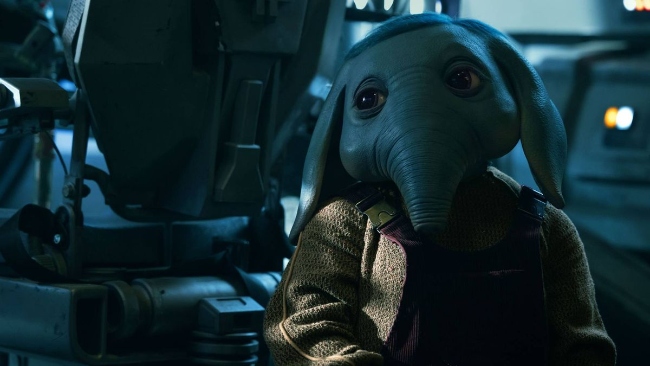
Nothing will ever top the lightning in a bottle that was the origin of Star Wars, especially in the modern era, wherein entertainment and media are at the tip of one’s fingertips at all times. There might be future times when the hype around Star Wars calls back to such a phase, but that juncture will never be fully recreated. However, Star Wars can put itself back in such a time through the stories that are told and the way in which they are told. Skeleton Crew is proof positive of this because it did exactly what A New Hope did—albeit on a smaller scale—so successfully that it is nearly impossible to explain to someone who has not seen the show just how good it is.
More than ever before, modern media is shaped by the reaction of audiences to said media. The power of social media and the ability for opinions to spread far and wide has reinvented how studios produce stories. One can believe what one does about the quality of such a reality, but one cannot deny it. Skeleton Crew’s future will be shaped by this climate, just as the shows and stories before it have been since the Disney purchase of Lucasfilm. This means that audiences and Star Wars enthusiasts must wait to see whether the future of Skeleton Crew includes a season two. Luckily, though, the story of Skeleton Crew beautifully wraps with Wim’s looking to the stars in his own twin suns moment, reminding us that Star Wars stories, when they are at their best, are both self-standing and intertwined with the proverbial galaxy of stories Star Wars has as a part of its mythos.
If the numbers are good and the money is right, Skeleton Crew will undoubtedly earn a second season. Nevertheless, its success needn’t be, nor should it be, defined by that. Instead, Skeleton Crew should be defined by what it does within the story because what it does is Star Wars the way that George Lucas would have made it. Skeleton Crew is Star Wars, and Star Wars is absolutely better for it.

 CLASHING SABERS