As Skeleton Crew progresses through what will hopefully be the first of many seasons, it continues to impress with just how authentically Star Wars it feels. The casting is spot-on, the writing is sharp, and the visuals effortlessly transport us back to the galaxy far, far away. It stands in stark contrast to The Acolyte, which, by nearly every measure, failed to deliver on its promise.
While watching the fourth episode, a thought occurred to me that I haven’t been able to shake. Before The Acolyte premiered, fans were excited about the prospect of a story set outside the Skywalker Saga — an era that has become increasingly over-reliant in the modern Star Wars landscape. The potential to explore new ground in the Star Wars universe generated optimism, which quickly evaporated when the series stumbled out of the gate.
In contrast, Skeleton Crew takes place within the context of the Skywalker Saga, between Return of the Jedi and The Force Awakens. Grounded in a time we know well, it manages to tell a unique story while still feeling like a natural part of the Star Wars universe. It’s doing something new, but still makes the audience feel right at home.

This is not to say that every Star Wars story needs to take place within the Skywalker Saga timeline. The High Republic initiative — which has arguably been the most successful aspect of the Disney Star Wars era in terms of fan reception and storytelling — proves that there’s room for tales set outside the familiar periods between the prequels and sequels. Yet, it’s hard to ignore the fact that the most successful Star Wars streaming shows — Andor, The Mandalorian, Ahsoka, and Skeleton Crew — all occur within the established framework.
If getting shows like Skeleton Crew and its predecessors means staying within the timeline between The Phantom Menace and The Rise of Skywalker, then I believe it’s worth sacrificing the pursuit of uncharted eras. It’s not ideal, but it’s far better than the alternative, as evidenced by The Acolyte.
Before the series launched, I would have been skeptical about Skeleton Crew shaping the future of Star Wars. It was seen by many as an afterthought. But since its release, the show has been met with nothing but praise — at least from the segments of fandom I engage with. Disney and Lucasfilm will undoubtedly take note of this success, and I suspect they will conclude that staying within the timeline from Episode I to Episode IX is the way forward. Whether or not that’s the lesson they should take is another matter, but I’m fairly certain it’s the one they will.

If I were in a position to influence the direction of Star Wars at Lucasfilm, I wouldn’t necessarily disregard this lesson. However, I would add a few caveats. First and foremost, I’d tell the entire team to step back and follow the lead of Dave Filoni and Jon Favreau. Assuming they had a more hands-on role with Skeleton Crew (which is part of the Mandoverse) than with The Acolyte— there’s even been a rumor that Filoni distanced himself from The Acolyte — it’s clear that these two creators have a firm grasp on what makes Star Wars work.
Moreover, I’d emphasize that future Star Wars stories should center on strong, compelling characters. When evaluating shows that have faltered — like The Acolyte — or those that received a lukewarm reception — such as The Book of Boba Fett — it becomes clear that the issue lies in not creating characters that are worth investing in. The Mandalorian and Skeleton Crew have introduced new characters who are dynamic, relatable, and fun.
At the heart of Star Wars’ success has always been its characters. Going all the way back to A New Hope, it was the relationships between Han, Luke, and Leia that resonated with audiences and sparked a cultural phenomenon. The story and visuals may have been important, but it was the characters that truly drew fans back into theaters, spurred the original trilogy’s success, and continued the Star Wars legacy for decades. Remove the depth from these characters, and Star Wars would have remained a fleeting pop culture moment.
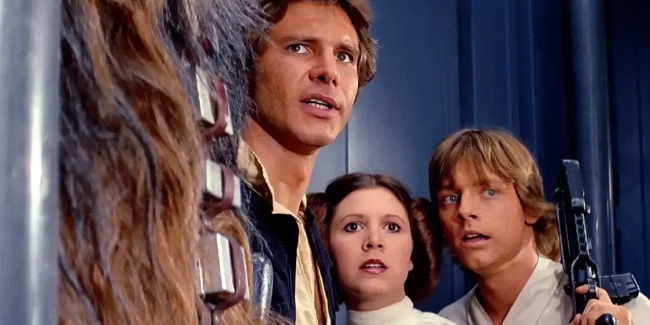
It would be misguided to deny that fans are drawn to Star Wars for many reasons — the visuals, the community, the world-building — but none of these would matter without the characters. Skeleton Crew has figured this out, and its success can be attributed to the way it focuses on characters, offering a story that resonates with audiences on a deeper level. While characters may not be the only thing that matters in Star Wars, they elevate everything else and ensure that each new installment continues to captivate those who sit down to watch. If Star Wars is to endure for the next 50 years (and beyond), it will be because of the characters at its core.

 CLASHING SABERS