When The Acolyte finished its first (and, recently confirmed, only) season, those of us who had been watching it reacted with some range of emotion between “okay, sure…” and “WOOF AM I GLAD THAT’S OVER.” Your mileage may have varied of course, but at least among the Clashing Sabers gang, our reactions tended more towards “WOOF” than “okay, sure.” It can be a very difficult place to land when you realize that the latest entry in the franchise series you love and support has turned out an abysmal clunker.
This is not a teardown of The Acolyte. Nor is this a teardown of Ahsoka. Nor Obi-Wan, nor The Rise of Skywalker, not even The Truce at Bakura (1). For if we are all truly honest with ourselves, we have all more than likely encountered a piece of Star Wars storytelling that we absolutely hated, bounced off of, rejected wholeheartedly, or felt betrayed by. So where should we go from that point? How should we respond when something produced within the universe we love turns out to be, well, less Into the Spider-Verse and more Amazing Spider-Man 2? Instead of dunking on any of the things we hate, let us consider our reactions and feelings in light of the following questions to ask yourself whenever Star Wars sucks.
- Am I the intended audience?
As it turns out, not everything is meant for everyone. Creators want to tell stories, oftentimes, for particular audiences. George Lucas himself knew he was making movies for kids between the ages of 9 and 14. That is going to create tendencies that may fall flat for older (or younger) audiences. Similarly, kids are not going to be enthralled by material composed for more mature consumption, such as The Godfather. You may not be the intended audience for what you just sat through, and that may be why it did not work for you like it did others.
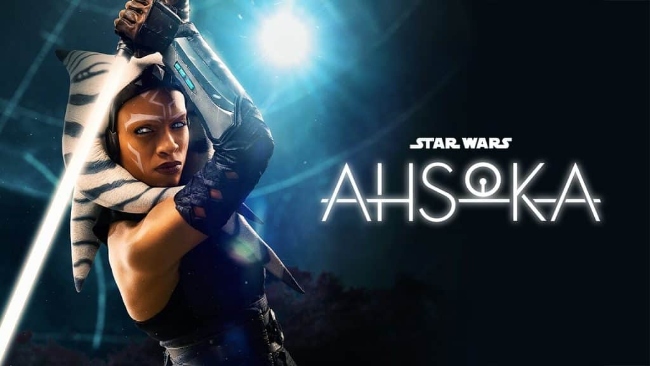
Not a Clone Wars/Rebels fan? Ahsoka may not land as successfully for you. Only interested in space battles and large action set pieces? Andor will leave you wanting. Not wild about the influence of real-world politics being superimposed upon the galaxy far, far away? The Legacy of the Force series will probably turn you off fairly quickly.
The challenge with audience intention is that accepting it may mean skipping out on it. This leads to a larger issue: the obsession with completionism or participation. So much of Star Wars discourse (and of course, outside of the Star Wars universe, all things online) revolves around being first; having the first reaction, having the first right reaction, being the first to comment on the reaction, being first to create discourse, being first to judge the discourse rather than the content, etc. Internet culture is exhausting and it is designed to be so. Allowing the online world to infect your real-world enjoyment can be poisonous. There is no law or statute or regulation or official guidance that says “everything ever created will be specifically created with you in mind.” Therefore, creators have the right to create things not for you and you have the right to not participate in it if you do not want to.
I hereby absolve you of any self- or externally-imposed obligation that says either you must consume all the content or (God-forbid) like all the content.
But let us presume that you may have been within the target audience for an entry, and yet it still was not for you. What must we think of then?
- Do I understand the creator(s)’s intentions?
Often times, our perceived quality of film (or whatever content you are enjoying) comes down to three simple questions:
- Does the film have a message that it wants to convey?
- Is it successful at conveying that message clearly?
- Is it entertaining enough for me to stay engaged?
However, there are a number of factors that go into whether we are distracted from those elements as well. Acting decisions, writing quality, story structure, set design, all the things that get Academy Award nominations basically. While those things may be limited (or enhanced) by the people involved in the creation of the content, the ultimate message and entertainment value of the content can rise above the distractions if it is strong enough. Personally, this is where The Acolyte fell apart for me. The distractions of the acting, structure, and writing absolutely bogged down what the creators were trying to convey as the message of the story. But the only way I could say that confidently is if I understand what the intentions of the creator was.
Leslye Headland, creator and main writer for Acolyte has not been shy about giving interviews following up with the last few episodes of her show (2). Mainly, Collider has a series of interviews that you can read here, here, here, and here. After viewing the last episode, and reading these interviews as they were released, it becomes clear what Headland’s goals were for the show: to show that not all the good guys are all good, and not all the bad guys are all bad (3). The message is clear that the Jedi Order, at the peak of its moral authority, is already suffering some grave tendencies, and that the Sith, while absent from the galactic stage for so long, might be… not as inherently and necessarily bad as the Jedi would have us believe. Here, I am not judging the validity of the theme, but rather seeking to identify the creator’s position. That’s what Headland wants us to see, not necessarily whether that is right or wrong.
So the message is clear, but is it communicated effectively? The more you watch The Acolyte, the more it feels like you are being beaten with a squishy hammer. The message is everywhere but it never feels like it makes a difference. From the first episode, we know something is amiss in the Order. We get some explanations early on but they are so flimsy (by design) that it is clear to both the audience and the characters that there is more to it. However, when we get to “the truth about what happened,” the audience is left with more puzzles and uncertainties than going into the episode. Certain character’s crippling guilt feels unfounded, other’s continued madness has no explanation, and all the problems could have been solved or avoided if characters would simply talk to one another instead of presuming (4). Character motivations go from alluringly obscured to dumbfounding fly-by-night alterations. While the action sequences are, as I have said on the podcast, some of the best lightsaber fights ever committed to screen, there are so many strange decisions made that the impact of the message begins to fizzle and fade away. No longer is the conversation about how power can corrupt and all institutions require transparency and accountability to survive; now it is about lacking emotional reactions to seeing your once-dead twin appear, what “splitting the consciousness into two” means, reconciling character’s abandonment of her children when her partner is murdered.(5)
And is it entertaining? Does the surface-level story grip you enough to hold your attention? How often are you reaching for your cell phone for another round of solitaire while the exposition train thunders on? Is it visually appealing? Are there exciting locations filled with life and motion or is it desolate flatness? This is less subjective than you might think since it is the single most easy element to gauge: are you entertained?
Sometimes, these things work together to create a product greater than its independent parts. Other times, they distract from the storytelling and reduce it to a “what could have been.” These things can all work together to reinforce what the creator wants to communicate or they can trip it up. Yet, despite all of this, it is still up to the viewer to attempt to understand the creators. The audience is the one tasked with understanding; the creator is tasked with communicating, and we must make sure we are sure of our roles. Without good understanding of the intentions, then we as the audience are suited for more disappointment. And when we fail to grapple with the intentions of the creators, we must ask…
3. Am I giving this a fair shot or have I brought inappropriate preconceived notions?
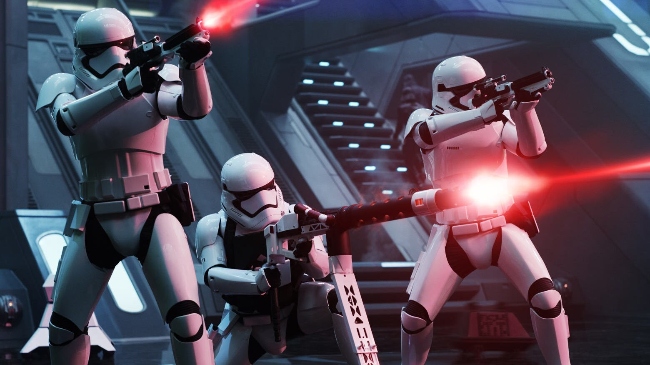
It is very easy for pre-release excitement to spoil the actual release. The longer we prognosticate, theorize, and speculate, the more out-of-control our expectations get. It happens every single time. The “theory” I always go back to on this point is the hype (and hope) for a stormtrooper rebellion in The Rise of Skywalker. When TROS was released, there was wild reaction to the lack of such a rebellion, to the tune of despair and tears for such a shortcoming, matched nearly by as much as the Reylo communities’ uproar. (6) However, an examination of the record is fairly clear that any such stormtrooper rebellion was not part of the plan nor strongly communicated through the predecessor films. In fact, the earliest reference to a stormtrooper rebellion goes back to fanfiction websites just after the release of The Force Awakens, where FN-2187’s defection was hoped (or daydreamed) to spread to the rest of the creche, and lead to an overwhelming rebellion of the entire armed forces. However, no ground for that is laid in either The Force Awakens nor The Last Jedi. Somehow, this idea caught on within the fandom and spread like wildfire. But wide adoption and anticipation does not equal certainty and laid groundwork. Simply because lots of people wanted it to happen does not mean it should or was meant to happen. That is the job of the creators to determine, not the consumers.
With that in mind, a healthy approach to enjoying any new Star Wars release must involve checking your expectations with the valet and letting them be parked out back. This does not mean avoid the trailers or promotional materials, but it might behoove to avoid spoilers, heavy-theorizing, reliance on rumors and suppositions, etc. Allow the creators to tell the stories they wish to tell, not the one that has lived in your head for three years. So much hard work goes into creating these stories, from writers to actors to directors to artists to special effect designers to promoters to musicians and so on, let them do the heavy lifting. There is no burden on you to be right about what a thing is before it is even released. I absolve you of any such burden in this way that you feel, as well.
Unrealistic expectations are hard to identify and require vigilant self-assessment. It means that we must be honest with ourselves and identify what associations with an as-of-yet-unreleased project are from reliable sources or someone’s imagination. And while there is no harm in speculation, hoping, dreaming, or even forecasting, there is great potential harm in conflating those things with set-in-stone elements. The Acolyte was billed as a murder mystery, orbiting around the machinations of the Sith at the time of the close of the High Republic era. The audience would be wise to set its expectations around that, rather than impose other ideas on it without foundation.
But I still hated it! I didn’t bring preconceived notions, I worked to understand what the creators intended, and I’m ostensibly part of the intended audience! What now, wise guy?
- Am I in a good state of mind to enjoy this?
I don’t know if you know this, but life can be a tad on the difficult side from time to time. Hard, even. Stressful, distracting, awful, traumatizing, chaotic, a never-ending series of sideshow freaks line-dancing across an eternal nightmare of Eldritch horrors beckoning our souls across the eternal beyond. You know, life.
We tend to take all of us into what we do and where we go, even to a galaxy far, far away. It is important to take inventory to ensure that our experience with a creation is not unduly influenced by forces it was never designed to take into account. Maybe you had a bad day and the next episode of The Acolyte is not going to help right now. Maybe you are exhausted and you simply cannot do another paragraph from Ronin.
You are not required to enjoy things when you are not in a good state to enjoy them. But it is likewise not fair to the thing when you are not in a position to enjoy it, either. It may be appropriate to allow time and intentionality to change you first before you step back into whatever project you wanted to enjoy. Have a glass of water. Go for a walk around the block. Schedule that doctor appointment you have been putting off. Vacuum the floor. Sit quietly for thirty minutes in the dark. Whatever it takes to allow yourself to fall back into a position where you can be open to the creative vision set before you, it is better to do that than it is to take the stressors of life, both big and small, into that project.
Maybe that takes fifteen minutes to accomplish. Maybe it takes the better part of two years. Whatever it takes, your health is more important than swish-swish-zip-pew-pew. Believe you me on this one.
- How does this impact the things I love about Star Wars?
Okay, you were in a good spot. You cleared your heart and mind and completely bounced off of whatever project it was you wanted to enjoy. You gave it a fair shot and still cannot believe how bad it was. And it should have been right up your alley! You thought this project was tailor-made to your particular loves and it flamed out like it was Johnny Storm! And now, as you sit on the couch slack-jawed and dismayed, you can’t help but feel like everything is over now. Star Wars is ruined for you forever.
Oh, yeah?
Listen, we have already determined that you do not have to like everything that comes out. Nor is everything intended for you. Now it is time to recognize that no project you hate can reduce the projects you love.
The Prequel Trilogy didn’t kill Star Wars (far from it). Neither did the Clone Wars show. Nor the video games or card games or endless amounts of 3.75” figures or any book or any show. No single entry has ever ruined all of Star Wars. And the evidence of that is each and every single creative project subsequently released after the alleged offenders’ release dates. And there is a corollary to that truth: there will be more projects in the future until such time as Star Wars ceases to exist.
As a hardcore Legends fan, I remember a distinct sense of loss when Disney’s purchase of the saga was announced alongside intentions for three new movies that would ignore and write-over what Legends had established. I felt that I had poured so much commitment into reading the novels, obsessing over the minutiae, and whatever ancillary material was available that this information was owed more than relegation to the dustbin of the internet archives. Surely, no one would ever again enjoy the Yuuzhan Vong war, or the X-wing series, or the Force Unleashed games. But something wild happened. Or rather, something specific did not happen.
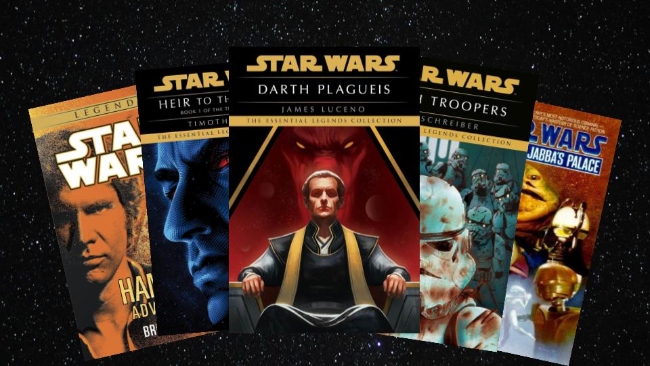
There was never a recall for those old books, no group of Pinktertons looking to collect that which once belonged to me. I still have access to all things. Additionally, so much of Legends has been absorbed into Disney Canon; the Essential Legends Collection began a renaissance of collecting and interest in stories of yesteryear. The third Force Unleashed game was definitely real at one point!
My point is this: I know that it looked dark when the Prequels were not well-received. It looked dark when Legends was eliminated. And it may look dark now. But you are still able to return to any earlier element of Star Wars that once brought you joy and you are under no compulsion to bring the baggage of more-recent disappointments with you when you do. Imagine this: a younger fan, at some point, will be utterly broken when the Mando-era of storytelling ends and the next installment begins and they hate it. You and I, as elder statespersons (7) of the Star Wars universe, can assure them that their beloved shows will remain (8), and that there is always hope that the next project will be better than this one.
- Should I just throw in the towel on this whole Star Wars thing?
I know that I have come face to face with this question more than once. Honestly, I still have concerns about how the professional world might feel about my niche-podcasting. Will I be taken less seriously once people know how I spend my free time? We have already seen that a single awful experience with a Star Wars project cannot render the rest of the saga dead, and that there is always hope for a better tomorrow, but is it possible to simply age out of such an affection for a fictional universe and its Force-wielding wonders? And if so, how do you know when that is?
If you believe that it is time for you to step away from Star Wars, I am not going to dissuade you from it. If you have made up your mind that you are done, I can respect that. If it no longer brings you the joy that you want it to, then you may be making the right decision.
But before you go.
Just watch this, one more time.
(1) Although, we are going to talk about most of these in some way, shape, or form. So buckle up, buttercup
(2) I will call it “her show” because of how in-depth her association with the project is. This project does not exist without her and her presence is clear in every decision-making aspect of it. To remove her would be to erase the show entirely; to replace her would make the show unrecognizable.
(3) Among other things. There are strong themes of duality, the impact of truth in storytelling, and also (for some super-unclear reason) how fatherhood can be sexist(?). Read the last interview if you don’t believe me.
(4) You know, like the lessons we were supposed to have learned in middle school, like your point of view isn’t everyone’s point of view? “Everyone’s fighting a battle you cannot see” type of thing? “You have to know enough to know you don’t know everything” lessons.
(5) For real though, where did Mother Koril go? You mean she just up and apparated out of there, and never EVER checked in with her own daughters again? She had so little interest in the survival of her coven and didn’t take the time to see if either Osha or Mae survived?
(6) Rightfully so. You heard me.
(7) This should be in my personal bio page for the podcast.
(8) Okay, but here is a real problem with the lack of physical media availability. No one came and took my New Jedi Order books off my shelf, true; but at some point, Disney may indeed decide to make certain content no longer available through its current offerings. Ask Willow fans about that show’s availability. Ask Apple about a copy of CODA, the Academy Award best picture winner from 2022. Ask Microsoft about games from the original Xbox and Xbox 360. When your content exists in a purely digital form through a streaming platform that you do not control, you do not have access in perpetuity. You have a license for time which you have no visibility to its expiration. No one can get my books, but they can certainly get my Disney+ watchlist. Keep that in mind.
 CLASHING SABERS