The third episode of The Acolyte, entitled “Destiny,” explores the history of twins Mae and Osha, the main antagonist and protagonist of the series thus far, while being raised by witches on Brendok. These witches believe the Force, which they call the Thread, ties everything and everyone together. Consequently, pulling on the Thread affects more than just oneself. The more one pulls, the more one affects their own destiny and the destiny of others.
While they are not as cavalier as the Jedi regarding their use of the Force/Thread, they are also not as resistant to using the Thread as a group such as The Path of the Open Hand, a cult that believes any use of the Force to be blasphemy with unknowable and untenable consequences. In a way, they fall between the Jedi and The Path along the spectrum of Force usage. They are not utterly resistant to it, but they do understand that each action they take, especially when using a power that connects the entirety of the galaxy, will have consequences.
When the Jedi arrive at the coven’s fortress, the philosophies of the Jedi and the witches are put in stark contrast. The Jedi, who have come because they believe that the witches are training children despite Republic law (the witches claim that Brendok is not a part of the Republic), see themselves as beacons of righteousness because of their role in society. Nevertheless, these “good guys” want to separate children from their families and pressure those children into making a decision that fits the narrative the Order purports.
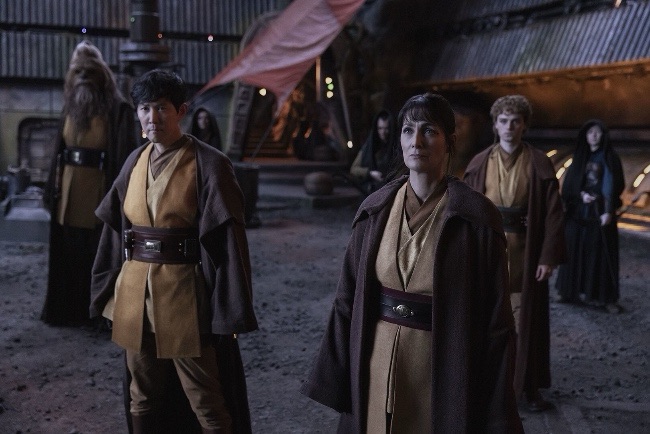
In contrast, the witches, namely Mother Aniseya, are less concerned with their narrative and more adamant that the children consider the consequences of their decisions. When Osha declares that she wants to be a Jedi, thus leaving the coven behind, Mother Aniseya conveys to Osha that, “Destiny is not decided for you by an anonymous Force. You get to make a choice, Osha. If you want to pull the Thread, then pull it.” This juxtaposes Jedi Master Sol telling Osha, “You must have the courage to say what you want.”
Neither Sol nor Mother Aniseya is wrong in what they are telling Osha to consider. Nonetheless, it is undeniable that Sol’s lesson contains a twinge of selfishness, as he encourages Osha to think only of what she wants, which stands in opposition to the lesson of Mother Aniseya, who essentially encourages Osha to think about herself with the understanding that her choice will have an impact beyond herself. Ironically, the witch from a coven whose powers are considered “dark” and “unnatural” perpetuates a philosophy far more balanced than the Jedi.
In the end, Osha’s choice to go with the Jedi is made for her when Mae (allegedly) starts a fire that (allegedly) kills the entire coven of witches, including Mother Aniseya. Osha is trained by Master Sol, who saves her from the fire, yet Osha leaves the Jedi Order ten years after the Brendok tragedy. While there are many questions surrounding both the fire and Osha’s abdication of her role as a Jedi, questions the show will certainly answer as the season progresses, taking things purely at face value supports the conclusion that Osha took her mother’s lesson to heart just as much as, or maybe more than, any lessons taught to her by the Jedi themselves. When whatever causes her to leave the Jedi happens, Osha takes control of her own destiny, just as her mother taught her, pulling on the Thread and thus blazing a path of her own.

Osha’s narrative intertwines with her twin sister Mae’s path. After the fire on Brendok, which left Mae, as far as she knows, as the sole survivor of the Brendok coven, Mae follows a path that has apparently led her into the arms of the Sith, the Jedi’s main rival across the Star Wars saga. While there are several blanks yet to be filled in, it is important to consider that, as far as audiences know, Mother Aniseya did not teach Mae the same lesson about one’s ability to choose one’s destiny as she did Osha. Therefore, it is not a stretch to imagine that a lost and confused Mae would conclude that the Thread upon which she (allegedly) pulled activated a destiny of darkness for her, one which she had little if any control over.
Equally likely is the possibility that Mae saw Brendok as a time in her life when she lacked control, thus pushing her to seek control through revenge. Regardless, Mae ends up controlled by the will of another and out of control of her own destiny, whereas her twin walks a path of her own determination. Once both twins are aware that their counterpart is alive, however, these paths cross, and the Thread is pulled once more.
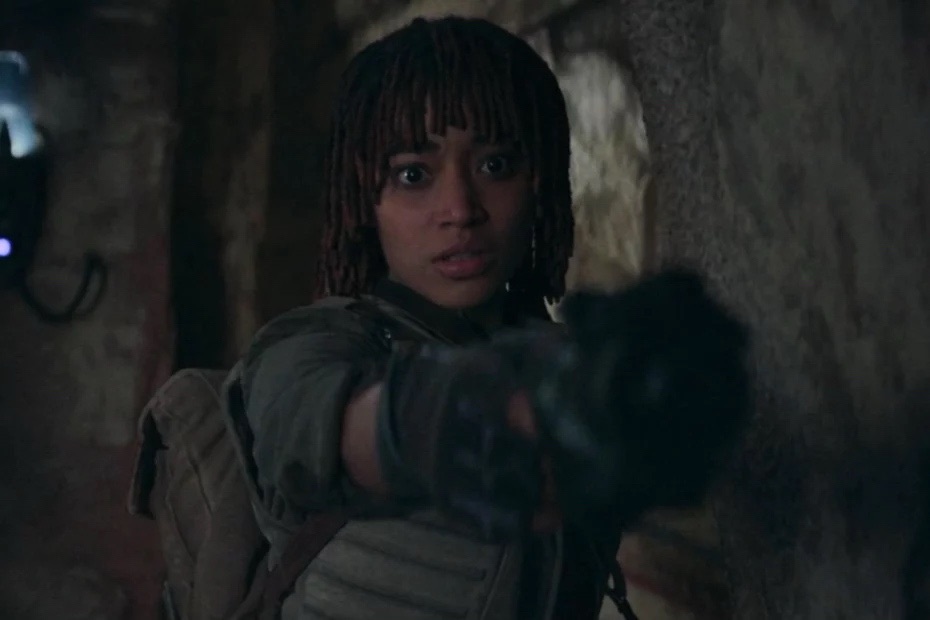
Creator Leslye Headland has referred to The Acolyte as a show of layers, like an onion of mystery and intrigue, slowly revealing itself to the audience. With five episodes left in the first season of the series, there are still a plethora of layers to peel back. The only undeniable and guaranteed fact is that the twins’ choices will shape audiences’ understanding of how the Force works, why the Jedi fell, and the interconnectedness of destiny and choice, thus shaping Star Wars storytelling moving forward.

 CLASHING SABERS