Despite a plethora of new installments coming out this year, it feels like Star Wars is also returning to The High Republic with the release of Eye of Darkness by George Mann. The novel takes readers into Phase Three of the initiative, back to the main timeline after a trek backwards in Phase Two. While Phase Two hit on all cylinders, fans have been craving a return to Elzar Mann, Avar Kriss, and Marchion Ro post-Starlight Beacon’s fall.
Mann had a tall task in terms of picking up a year after the tragic events of The Fallen Star. Much like Charles Soule had to do in the first Phase One novel, Light of the Jedi, Mann has to introduce audiences to the present reality of the galaxy. The more challenging task, however, was having to convey each individual’s reaction to the trauma of Starlight’s destruction whilst developing the conflict with the Nihil, pushing the story forward, and laying the ground work for the conclusion of the series, which is a mere two adult novels away.
Facing a task that would make mere mortals whimper, Mann elevated himself into the top tier of Star Wars authors in Eye of Darkness, especially when considering these three compelling elements upon which the book is centered.
3- The Struggle Of Identity
All good stories center around the characters finding and/or evolving their identity. Mann takes that concept and uses it to handily craft the internal and external dynamics between and within the Nihil, Elzar Mann, and Avar Kriss.
As a whole, the Nihil are unclear on what their identity will be now that they have the Stormwall erected and the Occlusion Zone on lockdown. Raiding their own territory is an option, but it will have diminishing returns; likewise, going beyond the Stormwall runs the risks of allowing the Republic to find a way through and losing Nihil foot soldiers that are needed to maintain their grip over Nihil Space. Who are the Nihil without chaos and destruction?
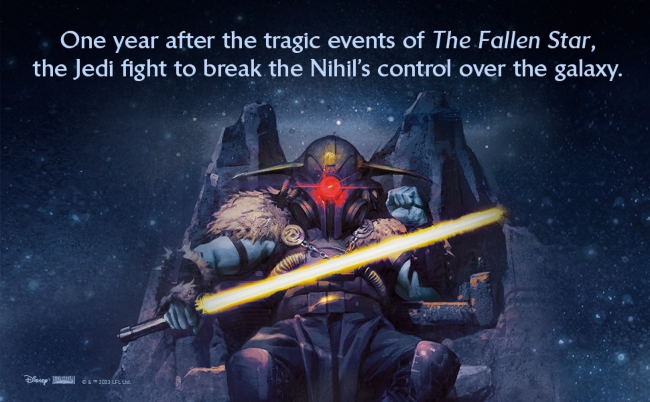
This conflict starts to create a rift among the members of the Nihil. Marchion Ro has yet to fully explain his ultimate goal beyond the eradication of the Jedi and the Republic, which is not an idea that all the Nihil are willing to die for. When former Senator Ghirra Starros begins to float the idea of negotiating with and possibly joining the Republic, some Nihil members begin to see it as a literal lifeline. While none have directly betrayed Ro in favor of Starros, the dissension of Quith Meglar proves that the fracturing of identity within the Nihil ranks could be their undoing.
Much like the Nihil, Avar Kriss’s ability to identify as a Jedi has become a task far harder than she could have imagined. Trapped behind the Stormwall, and thus separated from the formal Order of which she was the shining light, Avar is questioning what it really means to be a Jedi and how that influences her ability and desire to be one. Unable to pull off grandiose acts such as the one that earned her the moniker “The Hero of Hetzal,” Avar has reverted to helping the little guy in their struggle to survive in Nihil territory. In that she has found purpose, or so she thinks.
After risking her life to bring two barrels of grain to a starving village, the Friendly Neighborhood Jedi is awakened to the fact that those two barrels will only delay the inevitable, not resolve it. Mann writes, “She’d been so sure she was doing the right thing. Helping these people. But she couldn’t solve such systemic problems on her own. A stolen transport ship full of grain wasn’t going to defeat the Nihil. It wasn’t even going to register.” After feeling so sure of herself, she is left to wonder, to angst over, who she needs to become.

As it turns out, she needs to become Avar again. While considering what to do, she comes to a very simple but profound conclusion: “She had to come back to herself. She had to dig deep and find the old Avar again, and set her free. She had to accept all her failings and come to terms with everything that had happened.” Only in facing one’s history, accepting it without judgement, can one find the healing necessary to make the impact Avar knows she can make.
On the other side of the Stormwall, Elzar faces a similar internal struggle, which leads to….
2- The Ghosts
As with Avar, Elzar is trying to find himself again. Unlike Avar, however, Elzar is not the ideal Jedi. He’s not “The Hero of Hetzal.” He has flirted with the dark side and knows that he must always stand ready to push back against his base instincts. When Starlight Beacon fell, Elzar was only just beginning to understand how to live this way, guided by the training he received from Orla Jareni and his friendship with Stellan Gios. When they both perished with Starlight, Elzar was left in a reality than no longer made sense to him.
There was only one thing Elzar knew to be true: “Elzar could hardly breathe. He was drowning, unable to untangle the raging emotions, the guilt, the shame, the horror, the pain. Unable to concentrate, to even think clearly enough to seek peace and calm. Everything I do ends in suffering. Am I really so blind? So lost? Stellan would never have made this mistake. It should have been me who went down with the Beacon, not him. I’m not good enough.” With the ghost of Stellan’s legacy hanging over him, he was always doomed to failure. Unfortunately, as a Jedi Master, that failure is high stakes and costs lives.
Only when he forgoes that need to be Stellan, because he isn’t Stellan, can he become the best version of Elzar. Where Avar needed to become her old self again, Elzar needs to become something new. He has to learn that the best way to do what he really wants to do, which is carry on the legacy of Stellan, is to become his own Jedi. Through his reunion with Avar, the trios’ polestar, Elzar has begun heading in that direction.
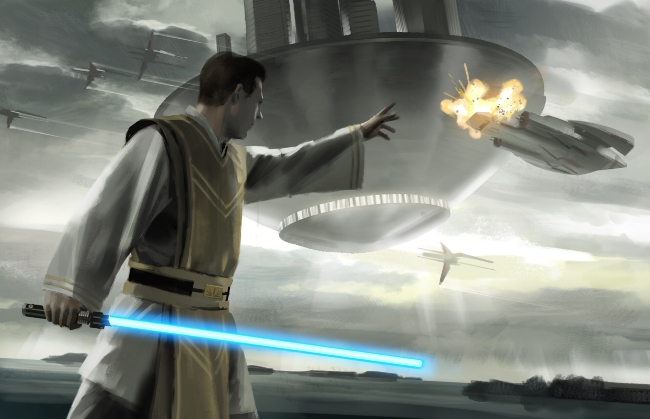
In a perverse reflection of Elzar, the leader of the Nihil, Marchion Ro, is haunted by his family history and the ghosts of Ro past. As Marchion plots, Mann writes, “Ro carried on walking, ignoring the chiding amused tone of the ghost. Burying the welling anger. He’d been hearing his father’s voice more often in recent weeks, along with another, one from the distant past, an Evereni whose story had echoed down the centuries, a name he had heard a thousand times as a child: Marda Ro. The original founder of the Nihil.” Where Elzar wants to carry on compassion, Ro wants to realize hate. Where Elzar wants to bring peace, Ro wants achieve vengeance. Where Elzar wants to prove himself worthy, Ro wants to prove himself supreme. Where Elzar wants to honor is found family, Ro wants to have his last name synonymous to fear itself. And where Elzar seems to beginning to find himself through learning of his ghosts, Marchion Ro seems to be sinking into chaos through the torture of his.
Two such storylines are bound to clash eventually, and there is a strong likelihood that it will center around the only Force user to survive an attack from the Nameless, Azlin Rell, “A former Jedi who had embraced the dark side and prolonged his life unnaturally on the arcane power it granted him.” Rell’s history makes him a ghost in his own right, haunting both the Jedi, due to his turn to the dark, and the Nihil, due to his surviving their greatest weapon. While Yoda did bring Rell back to help the Order, there is dissonance among the Jedi about working with such a betrayer. Whether this will prove warranted or not is for future stories and will be highly intertwined with what happens between the firmly established protagonists of Phase Three….
1- Elzar the Mann and Avar the Bliss
One of the major complaints around Phase One of The High Republic was the number of characters and the difficulty keeping up with everyone, let alone investing in everyone. Thanks to the Nihil’s destruction of Starlight Beacon, that is no longer a problem. There are now only a few main storylines (in the main adult novels) that readers are going to be required to follow. All will shape the eventual resolution of the story, but the connection between Elzar and Avar will be the one that decides what that resolution is.
Mann’s ability to flush these two character’s internal struggles out in a dynamic and compelling manner, simultaneously juxtaposing and paralleling their stories, is what really sets this book apart from its predecessors. Both are dealing with the same loss, Stellan’s death, but take extremely different approaches to the breaking of their trio. Elzar becomes more headstrong and desperate, whereas Avar becomes more introspective and open to change.
Moreover, the entire novel is essentially about these two characters fighting to break through the Stormwall to get to one another, all leading to their eventual ending hand touch moment. If Rian Johnson has taught us anything, it is that a touch of the hand is never just a touch of the hand. Whether Avar and Elzar are a capital D Dyad or just two connected characters is for the authors to know and the readers to find out. Regardless, these two need to find balance, in themselves, with each other, and in relation to the expectations of the Jedi Order, for the Jedi to be victorious against the Nihil.

 CLASHING SABERS